



New Challenges, Shared Responses
SUMMARY OF FOUNDATION UKRAINE’S ACTIVITIES
In the first half of 2026, Foundation Ukraine responded to the needs of migrants, refugees, children, families, schools and local communities through direct support, education, integration activities, and cooperation with institutions and local authorities.
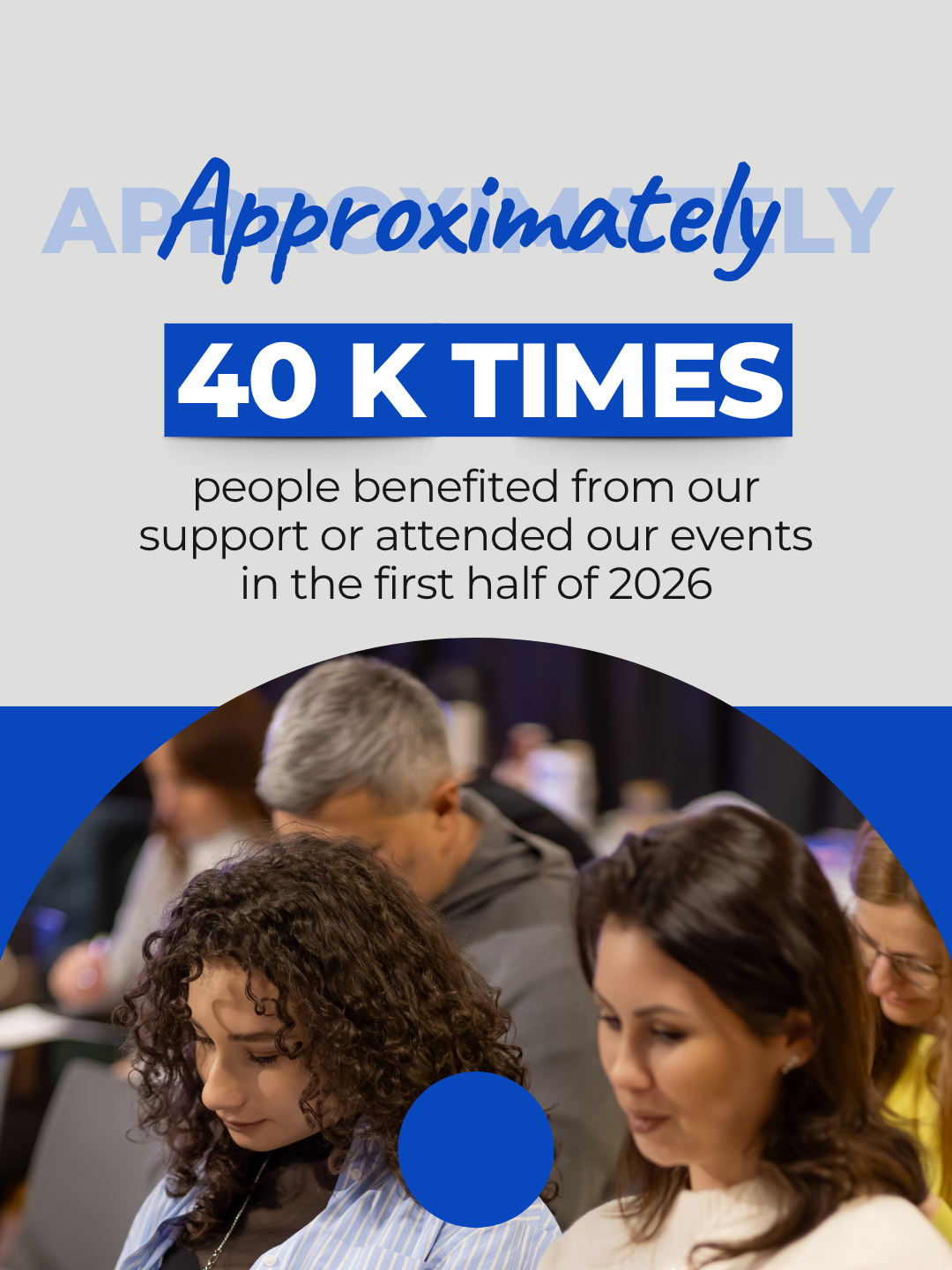
During this period, we recorded over 40,000 forms of support, attendances, consultations and visits — from legal and information consultations and language courses to educational, psychological and integration activities.
We are sharing this summary through the numbers, actions and changes we created together.
Projects Responding to Emerging Needs
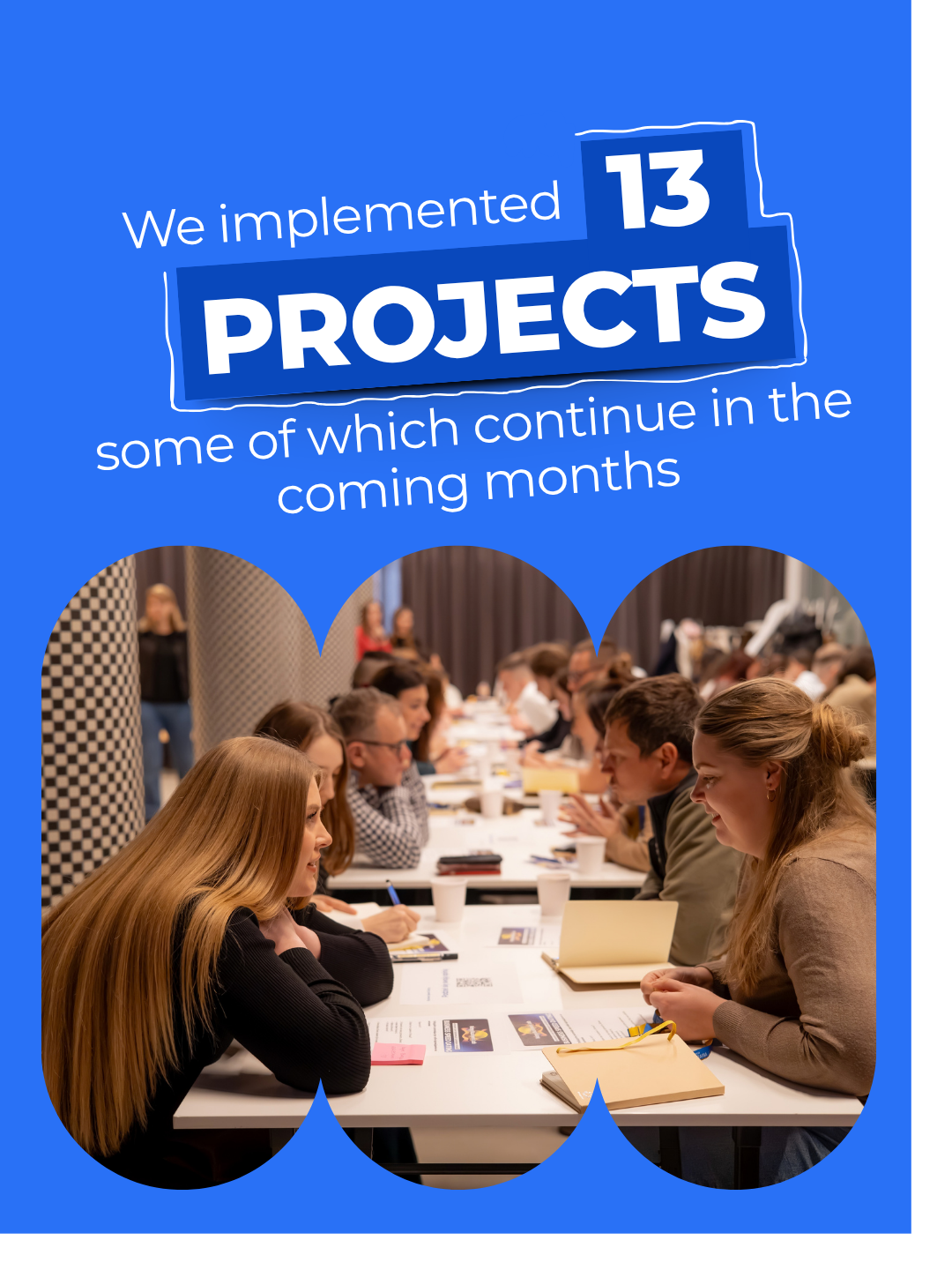
The first half of 2026 was a period of intensive project work carried out in cooperation with local, national and international partners. During this time, Fundacja Ukraina implemented 13 projects, continuing proven initiatives from previous periods while also launching new ones in response to the current needs of the community. Our activities included information, educational, integration, psychological and intercultural support, as well as capacity-building for children, young people, adults and institutions.
A Safe Start and Access to Information
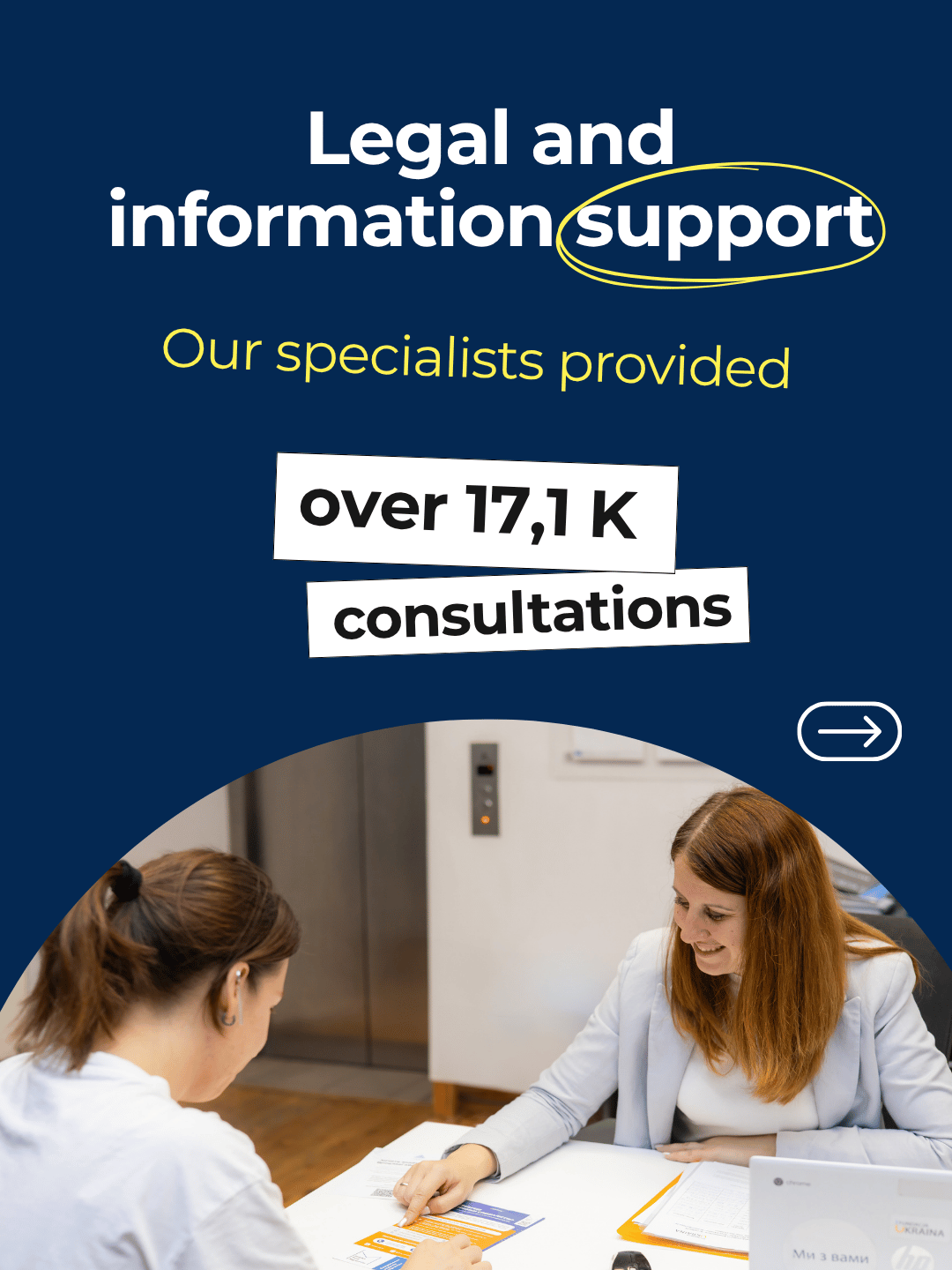
In the first half of 2026, our specialists carried out over 17,100 consultations in total. They were delivered as part of various Foundation Ukraine activities, including the Lower Silesian Center of Polish Culture and Navigate Poland, supported by the International Rescue Committee Poland Foundation.
We provided support in matters related to residence procedures, family, employment, administrative and legal issues. The consultations helped migrants and refugees better understand formal procedures, make important decisions and feel safer in their everyday life in Poland.
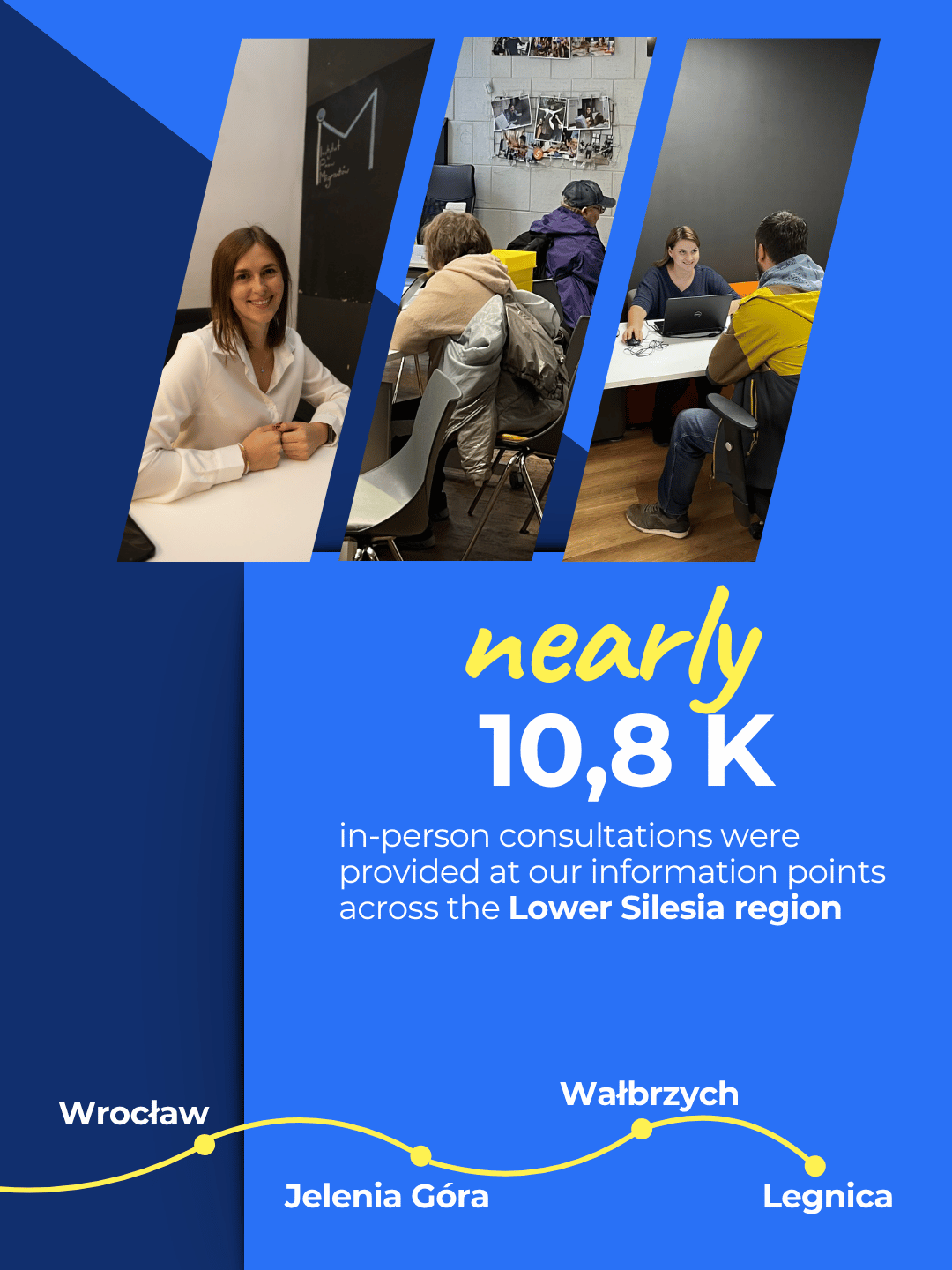
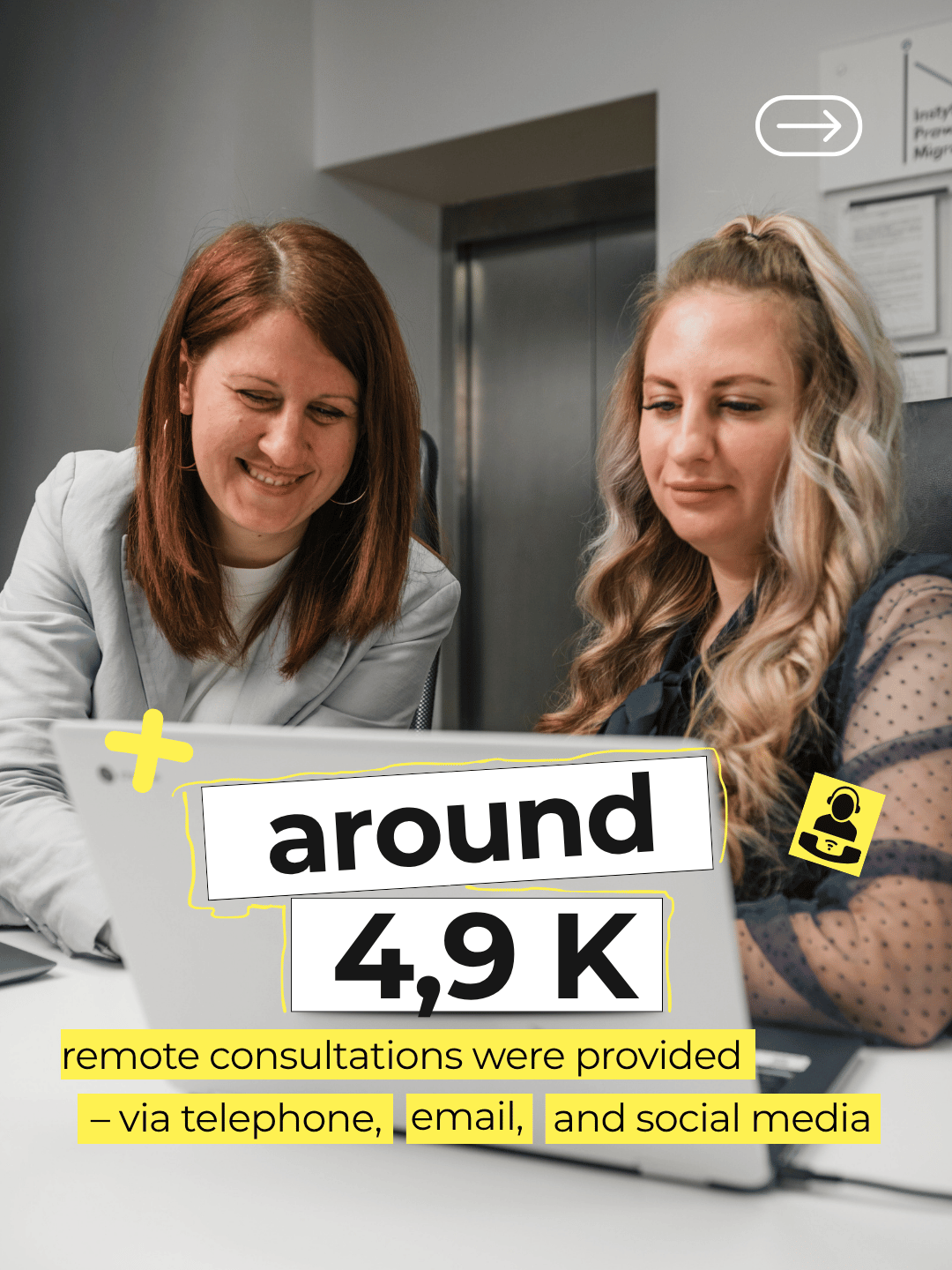
The largest share consisted of in-person consultations at advisory points in Wrocław, Jelenia Góra, Wałbrzych and Legnica. In total, nearly 10,800 general consultations were provided there. At the same time, we continued developing remote support — by email, phone and social media, we provided 4,880 consultations.
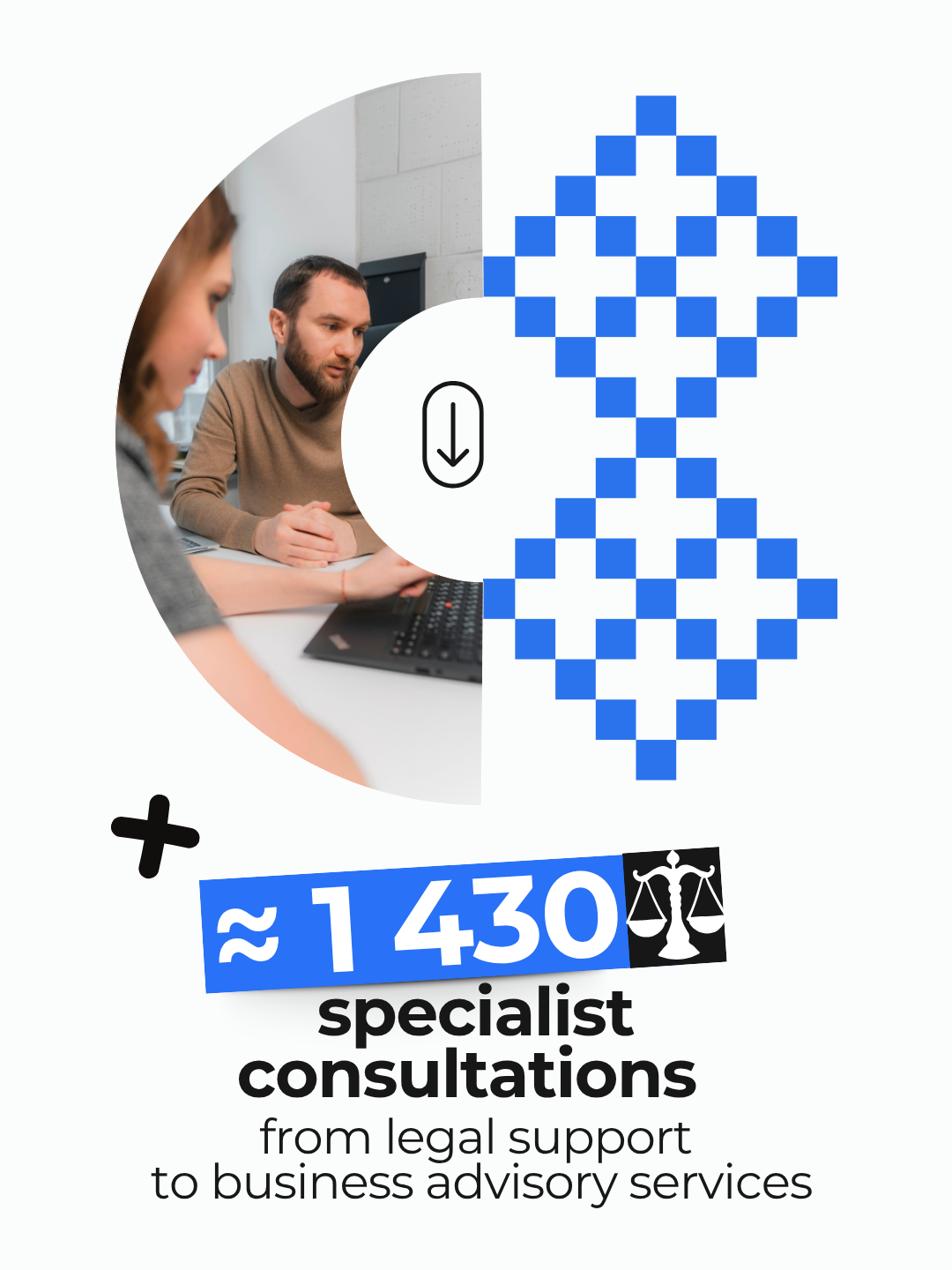
Individual specialist consultations were also an important part of our work. In the first half of 2026, over 1,430 such consultations were held — from legal support in family and employment matters to advice for people running or planning to start a business.
Our support was not limited to advisory points. We also reached places where access to help can be more difficult, including collective accommodation centres and partner organisations. There, we provided 49 consultations.
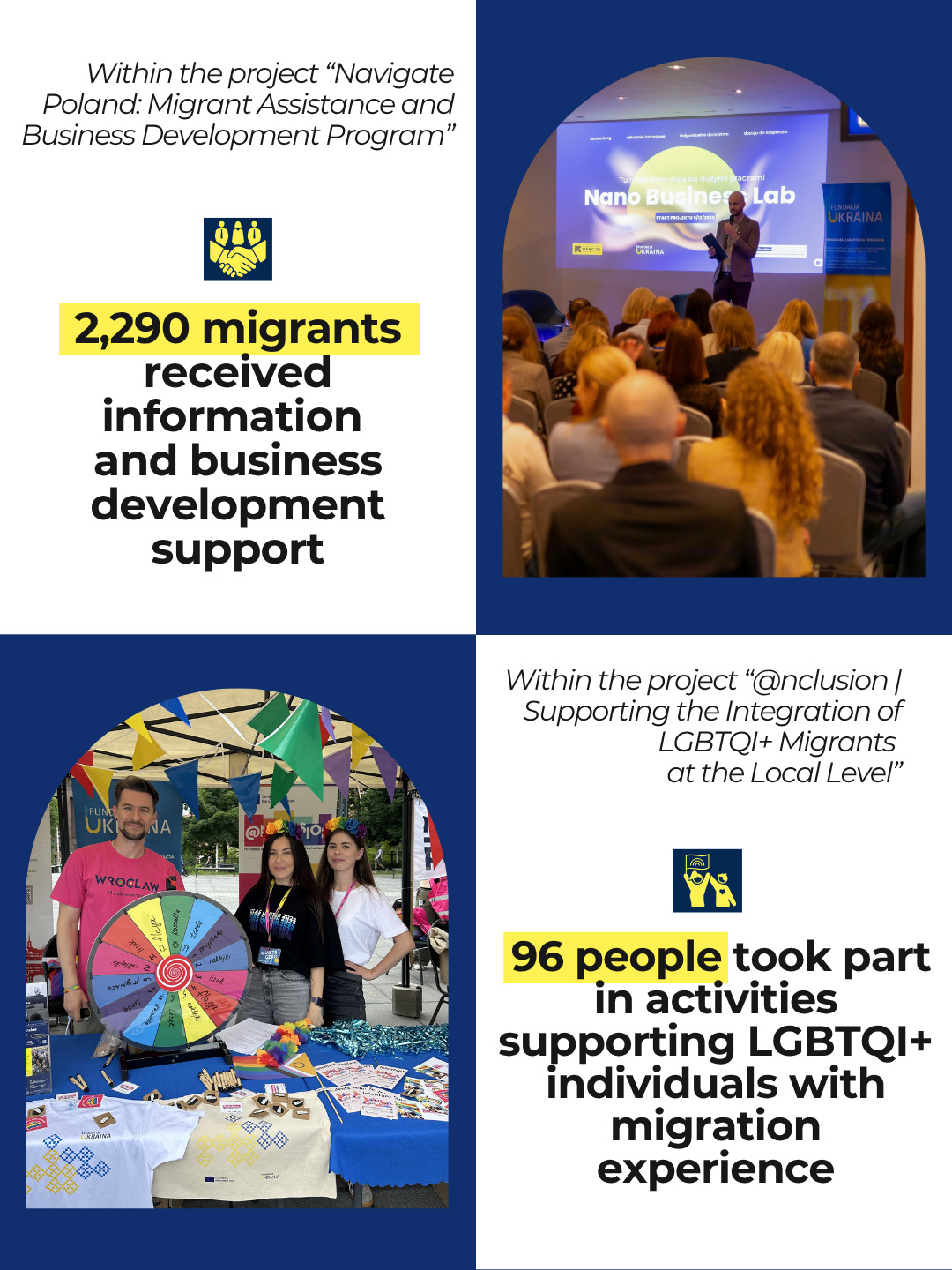
As part of the Support Programme for Migrants and Business Development in Lower Silesia – “Navigate Poland: Migrant Assistance and Business Development Program”, we supported migrants and refugees living in Lower Silesia in navigating everyday life in Poland and developing their business potential.
We carried out 54 activities, reaching 2,290 people through:
- 31 webinars — over 1,450 participants;
- 6 Nano Business Lab workshops in Wrocław and Jelenia Góra — 190 people;
- 5 Nano Business Lab networking meetings — 205 participants;
- 12 outreach group meetings in 13 locations across Lower Silesia — 440 recipients.
Through outreach activities, we were able to reach people with more limited access to information and support, including those staying in collective accommodation centres, using local institutions or connected with regional partners.
As part of @nclusion | Fostering Inclusion of LGBTQI+ Migrants at Local Level, we continued developing the Rainbow Buddies programme, which supports LGBTQI+ migrants in building a sense of safety, relationships and connection with the local community.
The programme included trainings, introductory meetings, supervision and integration activities. We reached 96 people — including programme participants as well as representatives of NGOs and public institutions.
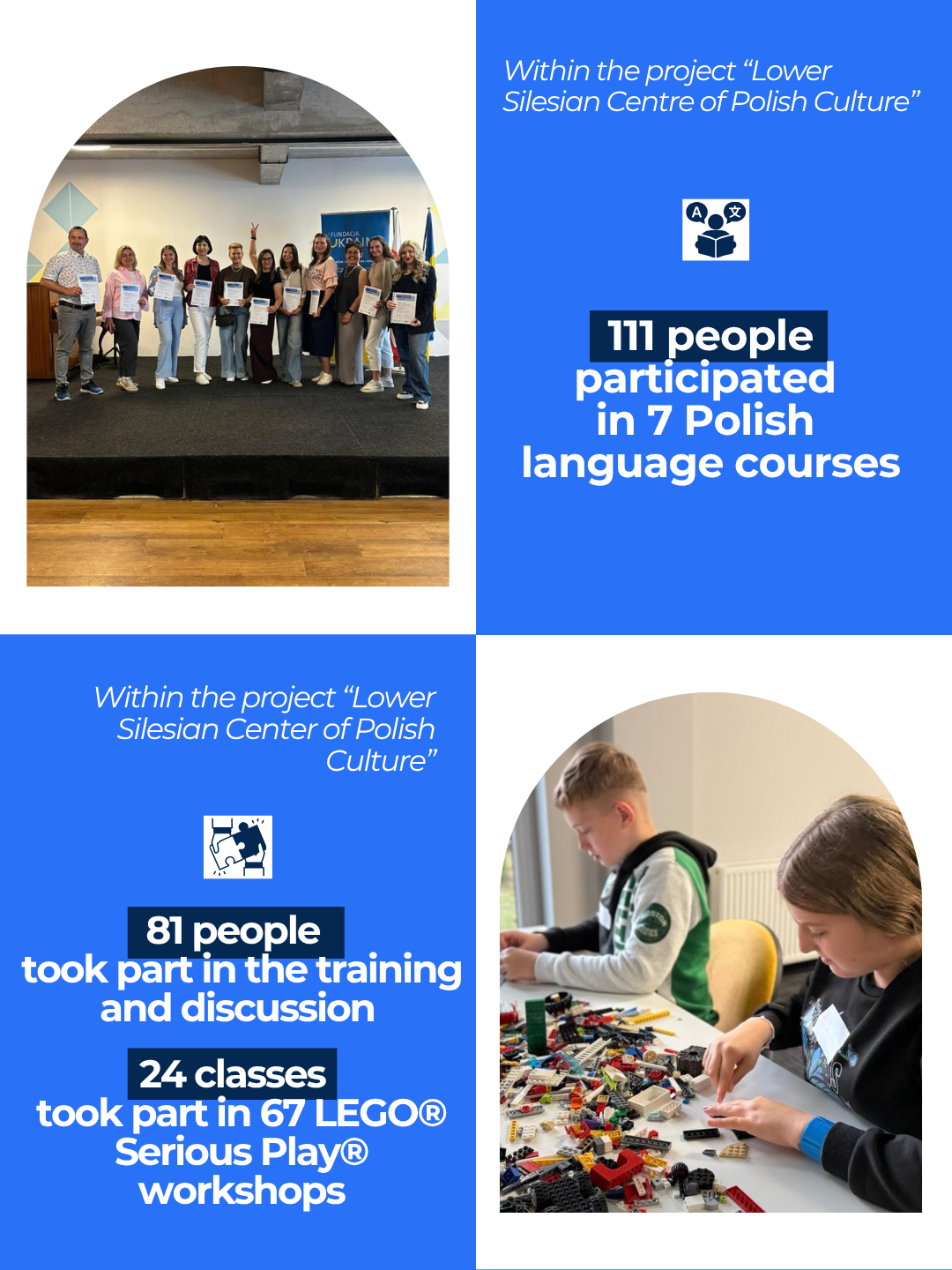
In the first half of 2026, as part of the Lower Silesian Center of Polish Culture project, we carried out activities that helped migrants and refugees navigate everyday life in Poland and strengthened the skills of people working in multicultural environments.
We delivered 7 language courses, totalling 697 hours of learning, attended by 111 people. The courses helped participants overcome language barriers, build confidence and feel more comfortable at work, at school, in public offices and in the local community.
As part of the Lower Silesian Center of Polish Culture, we also organised:
- 67 LEGO workshops in Wrocław and Legnica, supporting integration, cooperation and communication in multicultural classrooms. The workshops reached 24 school classes in Wrocław and Legnica.
- a 4-day “Foreigners in Poland” training for 58 people, focused on the basics of migration law, residence procedures and practical support for migrants;
- a debate for the host community with 23 participants, dedicated to integration and shared responsibility for a multicultural local community;
Support for Children, Young People and School Communities
One of the key areas of our project work in the first half of 2026 was supporting children and young people with migrant and refugee backgrounds, their families and schools. We focused on education, mental wellbeing, classroom integration and strengthening the skills of people working with children in multicultural environments.
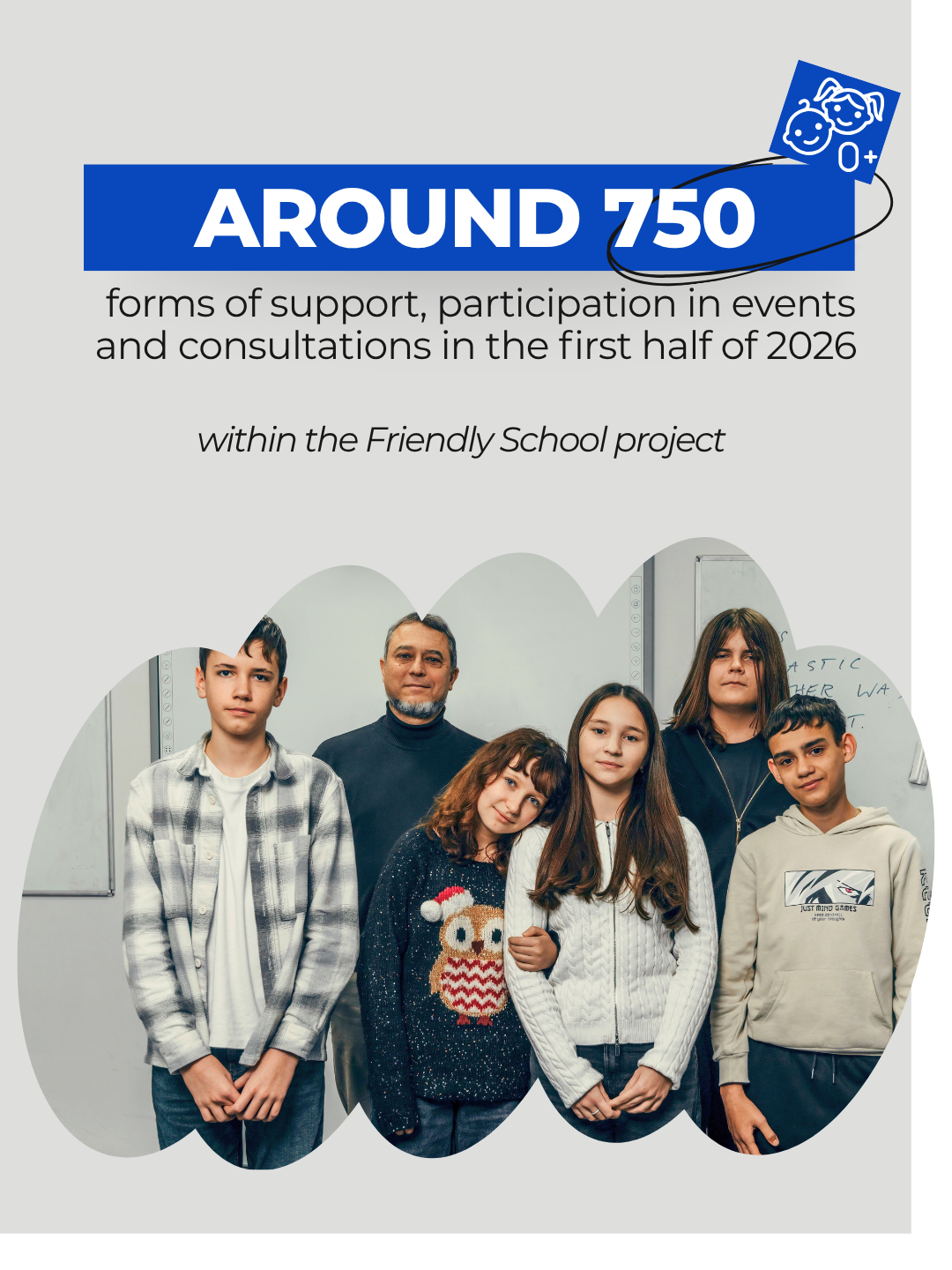
As part of Friendly School – a government programme for equalising educational opportunities for children and young people (2025–2027), we supported children and young people with migrant and refugee backgrounds, their parents and entire school communities.
59 schools applied to take part in the project. First activities began in 36 institutions, and in-depth needs assessments were carried out in 34 schools.
Since the beginning of the year, we recorded around 750 forms of support, attendances and consultations. Activities included psychological support, career counselling, MHPSS workshops (Mental Health and Psychosocial Support), information meetings for parents and school staff, and individual support for students.
We delivered, among others, 205 hours of psychological support for children and parents, 16 consultations for teachers, 86 hours of career counselling, 36 hours of MHPSS workshops, information meetings for parents, and individual support for students.
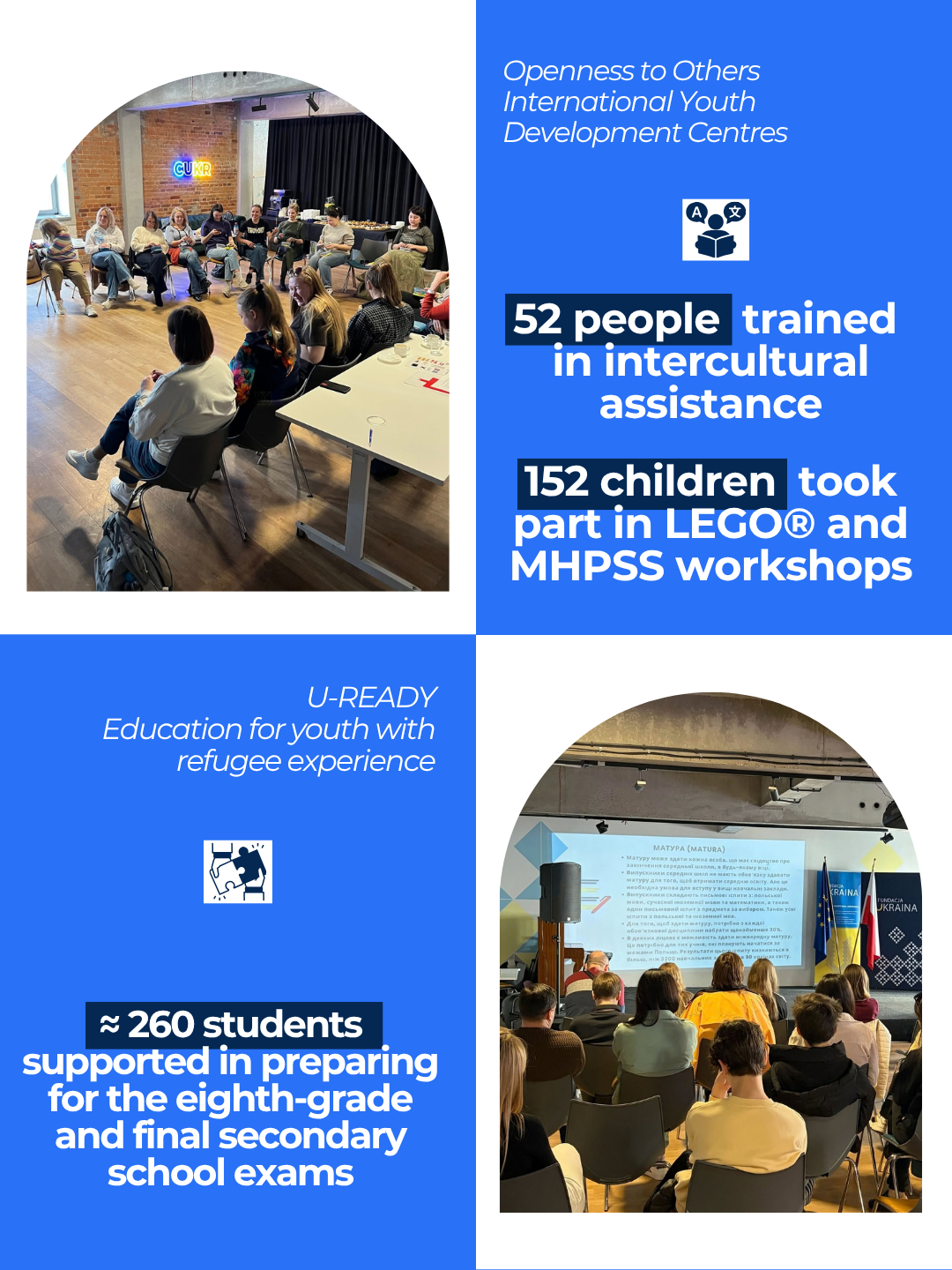
As part of Openness to others as the foundation of a peaceful future: International Youth Development Centres in Kielce, Wrocław and Kraków, Foundation Ukraine began its activities as a project partner.
In the U-READY – Ukrainian refugee employment & advancement for displaced youth project, we supported young people with refugee experience in preparing for exams and strengthening their mental and psychosocial wellbeing.
In the first half of 2026, we supported around 260 students in total. We delivered 627 lessons preparing students for the eighth-grade exam and the matura exam in Polish, English and mathematics, as well as 25 MHPSS meetings.
In Wrocław, the activities reached 192 people. We ran 36 subject-based groups in 12 locations, delivering 435 lessons and 19 MHPSS meetings.
In the region, we supported 67 students. Classes took place in 15 groups across 5 locations and included 192 lessons and 6 MHPSS meetings.
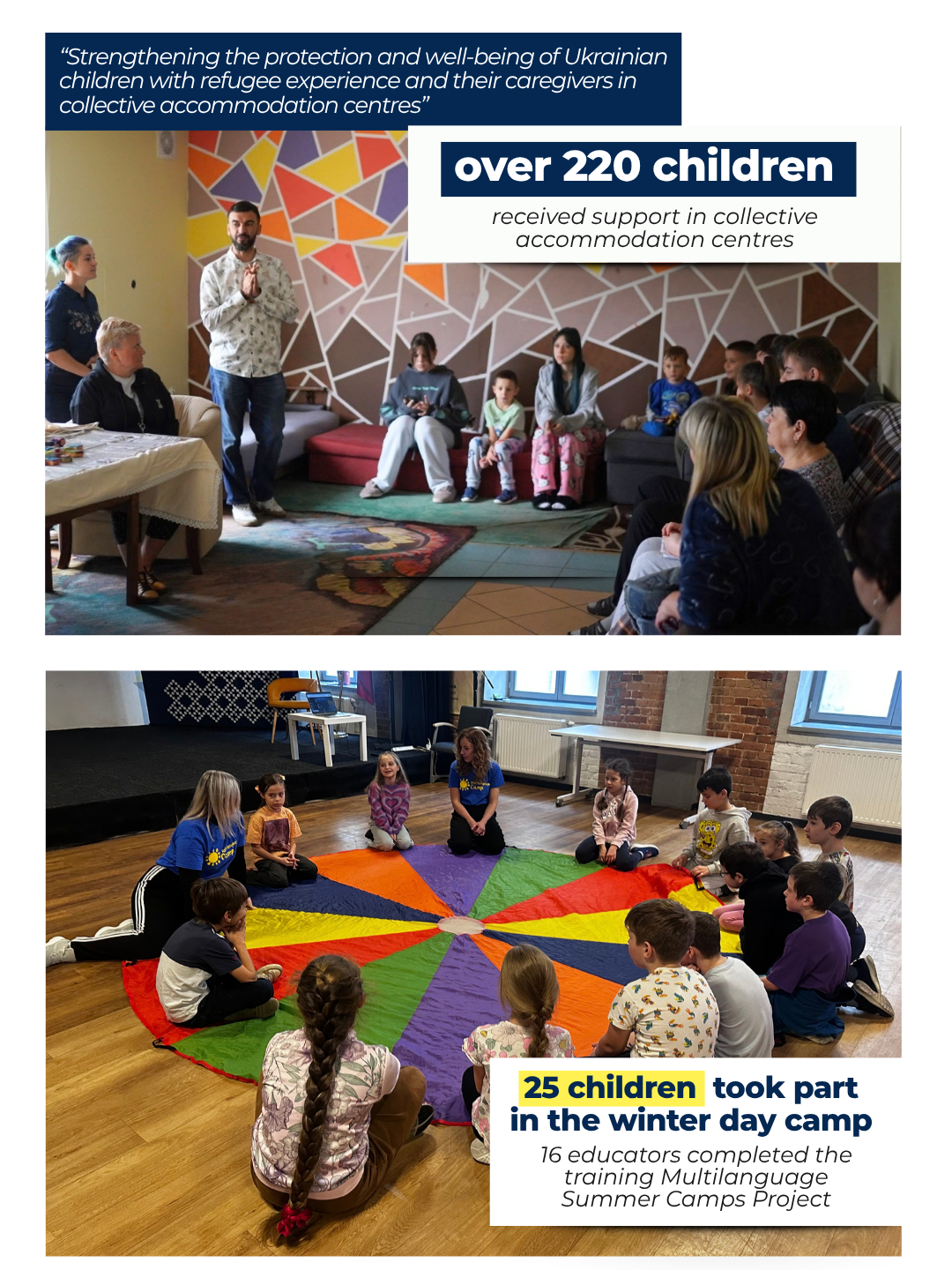
As part of Multilanguage Summer Camp, we organised a two-day Multilanguage Sport Days event for 25 children, a training session on strengthening competencies in working with multicultural groups for 16 education professionals, and a job-shadowing visit to a partner organisation in Elche, Spain. The experience gained will enrich the programme of the August MSC day camps in Wrocław.
As part of the project “Strengthening the Protection and Well-being of Ukrainian Refugee Children and Their Caregivers in Collective Accommodation Centres”, we delivered 35 sessions for 221 participants. These were practical, interactive activities combining play, movement, LEGO®-based exercises and teamwork to support well-being, integration and mutual understanding.
These activities are particularly important for children who have experienced forced displacement. They help rebuild a sense of safety, develop trust, connect with peers and adapt more easily to a new environment.
Integration Through Everyday Contact — Our Non-Project Activities
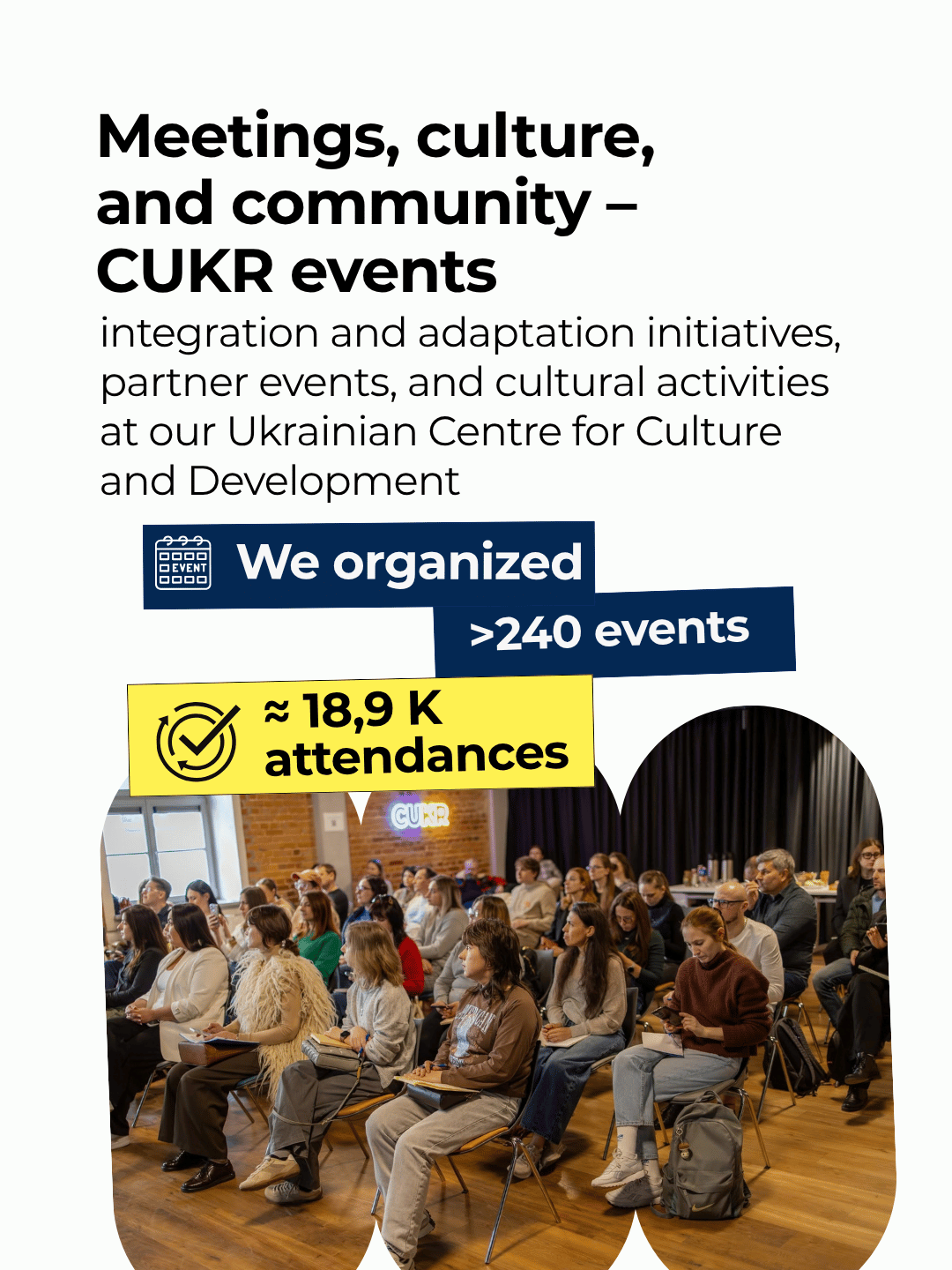
Integration also happened beyond projects and consultations. In the first half of 2026, we organised over 240 social and integration events, recording an estimated 18,900 attendances and visits.
These included language club meetings, educational events, the Cashflow training game, as well as partner and cultural events at our Ukrainian Center of Culture and Development (CUKR).
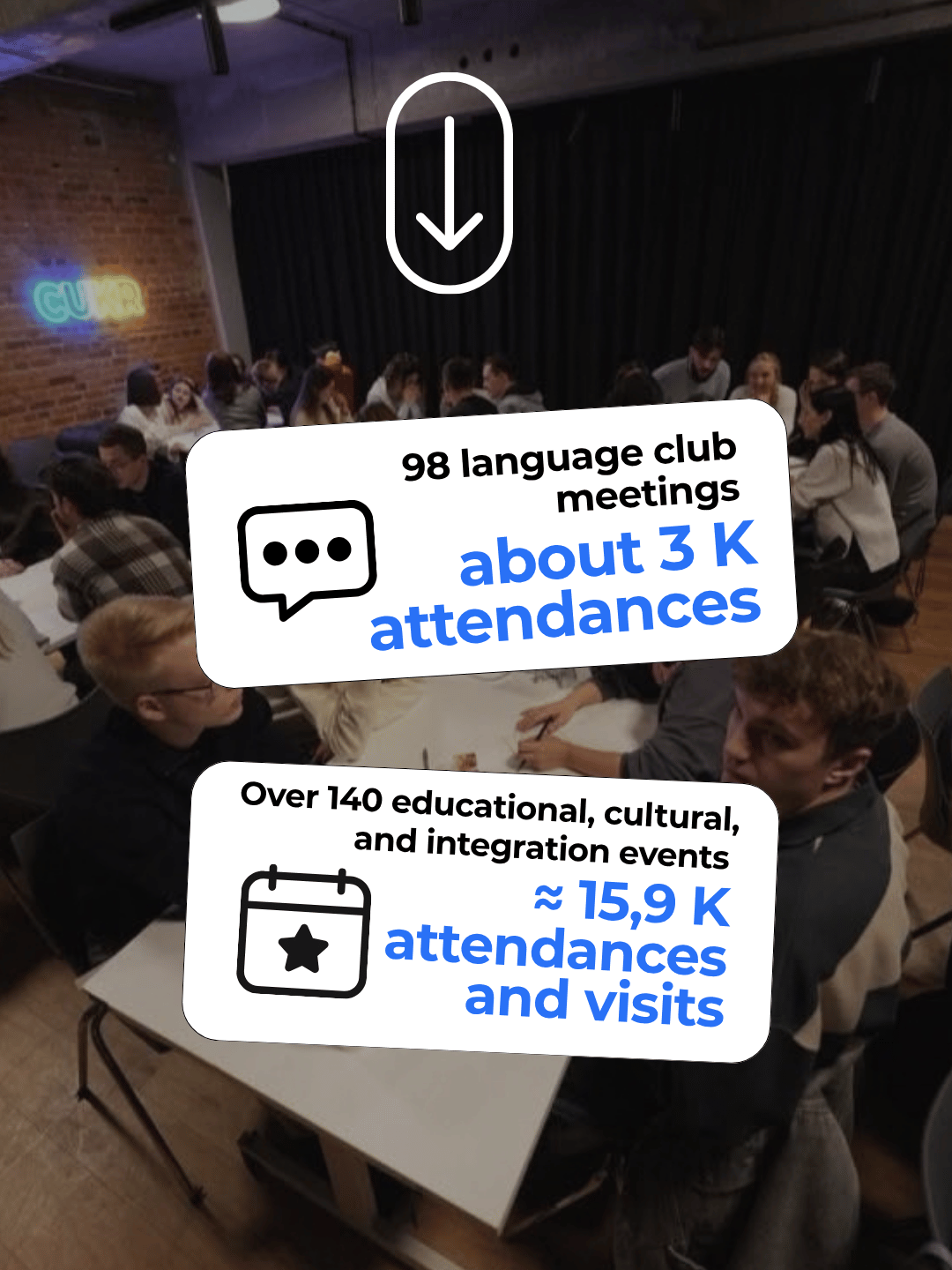
Participants joined 98 language club meetings — Polish Speaking Club and English Speaking Club — around 3,000 times. These meetings helped them learn languages, overcome communication barriers and build social connections.
Another 143 events included Cashflow, educational meetings, partner activities, adaptation initiatives, performances and concerts. Together, they generated around 15,900 attendances and visits.
The everyday activities of CUKR were also supported by volunteers from the European Solidarity Corps (ESC) 2025/2027 project, strengthening intercultural dialogue and the engagement of Wrocław’s local and English-speaking communities.Europejski Korpus Solidarności (EKS) 2025/2027, wzmacniając dialog międzykulturowy, zaangażowanie lokalnej oraz anglojęzycznej społeczności Wrocławia.
From Experiences to Systemic Change — Advocacy and Public Voice
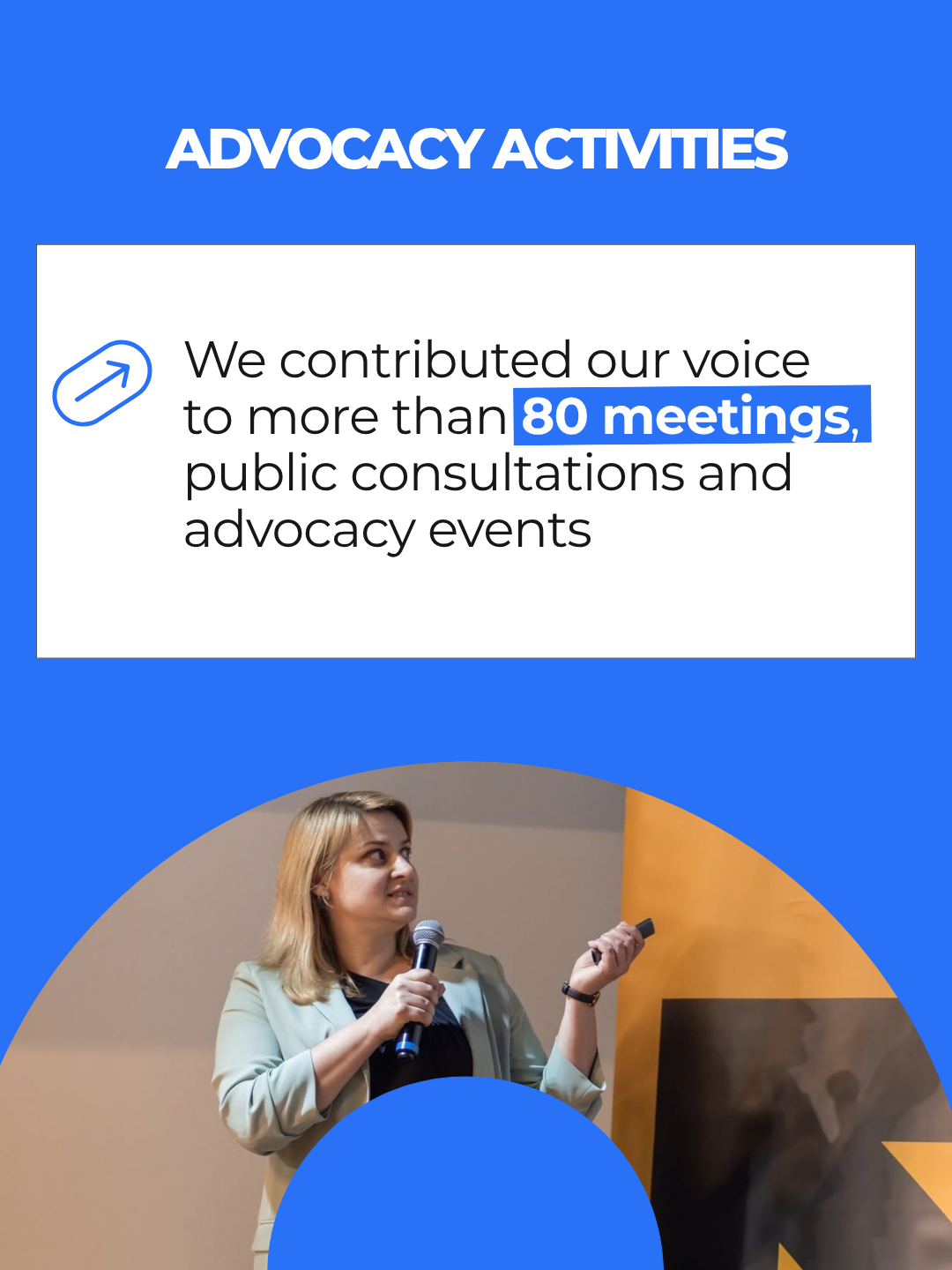
In the first half of 2026, Foundation Ukraine participated in over 80 advocacy meetings, consultations and events, strengthening the voice of migrants, refugees and local communities in conversations about the future of integration.
We understand advocacy as work on solutions rooted in the everyday experiences of people with migrant and refugee backgrounds. That is why we were present wherever strategies, laws and local policies are shaped — in public consultations, conferences, working groups, and meetings with local governments, public institutions and civil society organisations.
Our activities focused on several key areas:
- residence security — including the future of temporary protection and solutions for Ukrainian citizens, for example during consultations on changes to the Ukrainian special act;
- education and multicultural schools — especially the role of intercultural assistants and support for children with migrant backgrounds, including in discussions with the Ministry of National Education and the Education Board;
- the labour market — including migrants in local economies and developing their professional potential, for example through the work of Skills Alliance Polska;
- local and national policies — including Wrocław’s Intercultural Policy and Poland’s Integration Strategy;
- social resilience and crisis management — taking into account the situation of migrants in Lower Silesia, including during the Resilience Meeting in the Senate;
- cooperation between local governments, institutions and civil society organisations — including meetings with local governments in Lower Silesia and the work of the Wrocław Council for Equal Treatment;
- the role of the diaspora in Ukraine’s recovery — including during the Civil Society Forum and Ukraine Recovery Conference 2026.
Through these activities, Foundation Ukraine contributed to shaping solutions related to integration, education, the labour market and support for migrants.
Solidarity That Strengthens Everyday Work
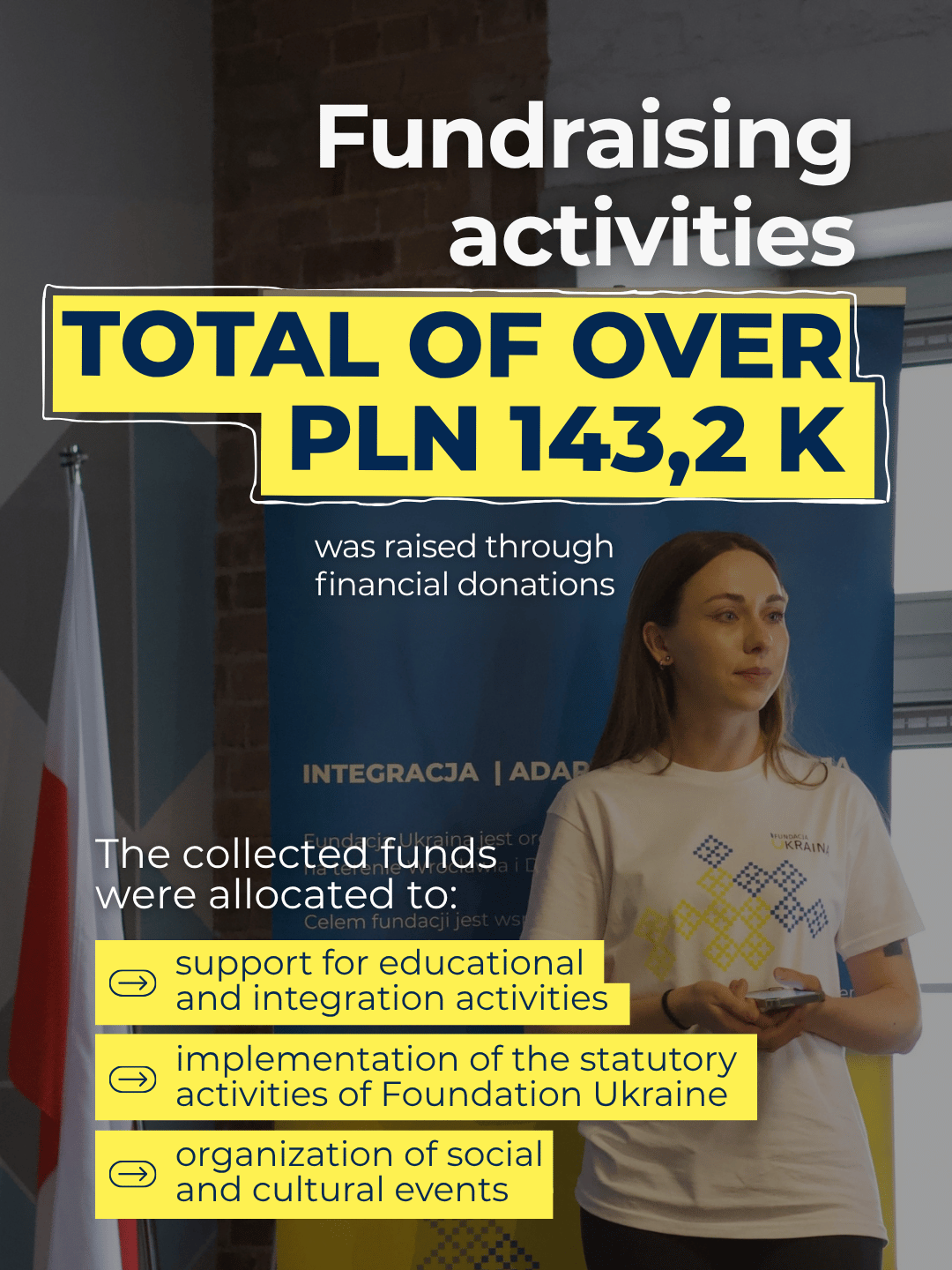
In the first half of 2026, we continued fundraising activities to support Foundation Ukraine’s statutory goals. Thanks to the support of donors, partners, individuals and legal entities, we raised over PLN 143.2 thousand in financial donations.
This amount included:
- PLN 74,331.51 raised for statutory purposes;
- PLN 6,729.00 raised through an online fundraiser;
- PLN 62,189.45 from individuals and legal entities, including funds donated through the 1.5% tax allocation during PIT settlement.
The funds raised support activities closest to the everyday needs of migrants, refugees and local communities: information and legal assistance, language courses, psychological support, education for children and young people, integration activities, and strengthening schools and institutions working in multicultural environments.
We also received an in-kind donation from UNHCR — computer equipment worth PLN 21,281.64, designated for the needs of Foundation Ukraine’s office.zł, przeznaczony na potrzeby biura Fundacji Ukraina.
Stay With Us
Donate to Foundation Ukraine and become part of the change we are creating together in Lower Silesia.
Thanks to your support, we can provide reliable information assistance, run psychological, educational and integration activities, and create safe spaces for meeting, growth and building social connections.
Thank you for being with us. Every donation matters.