


Project description
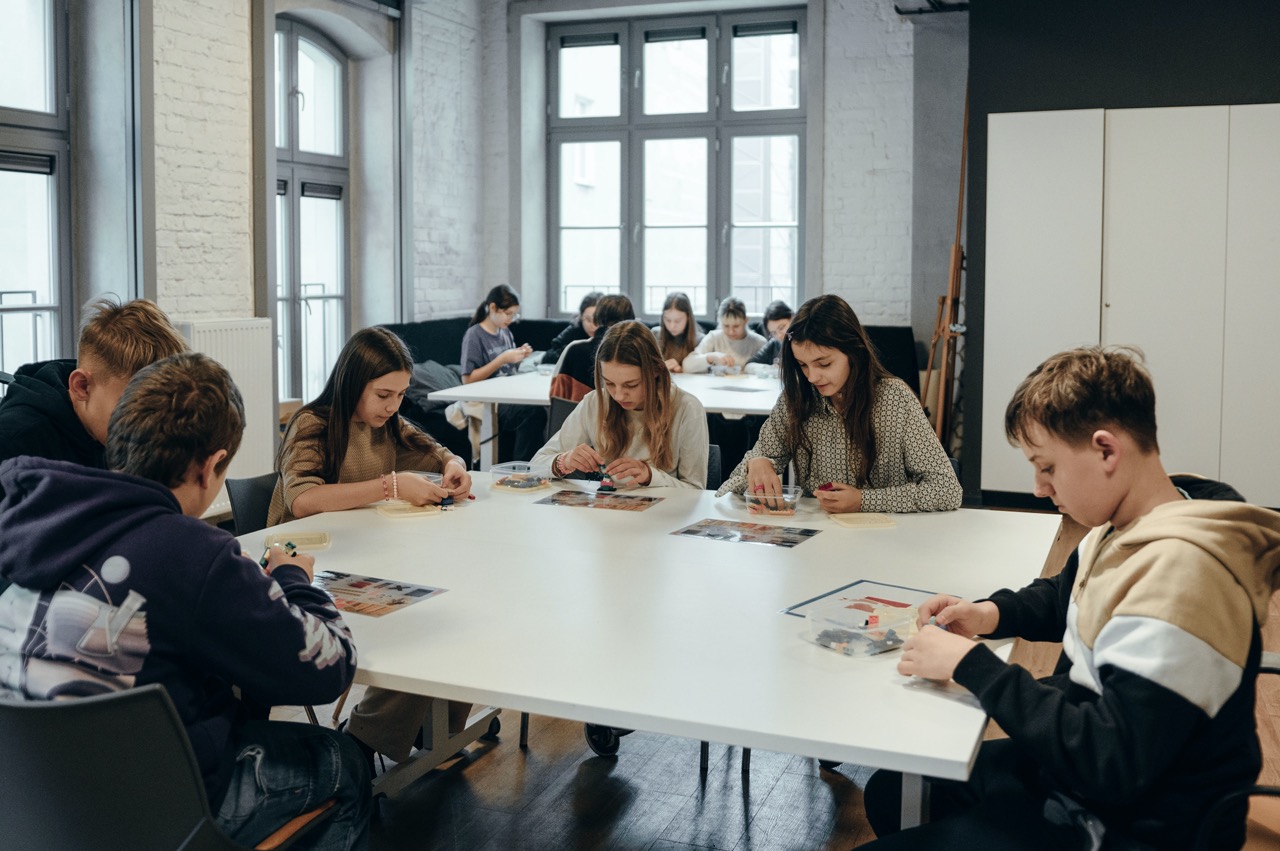
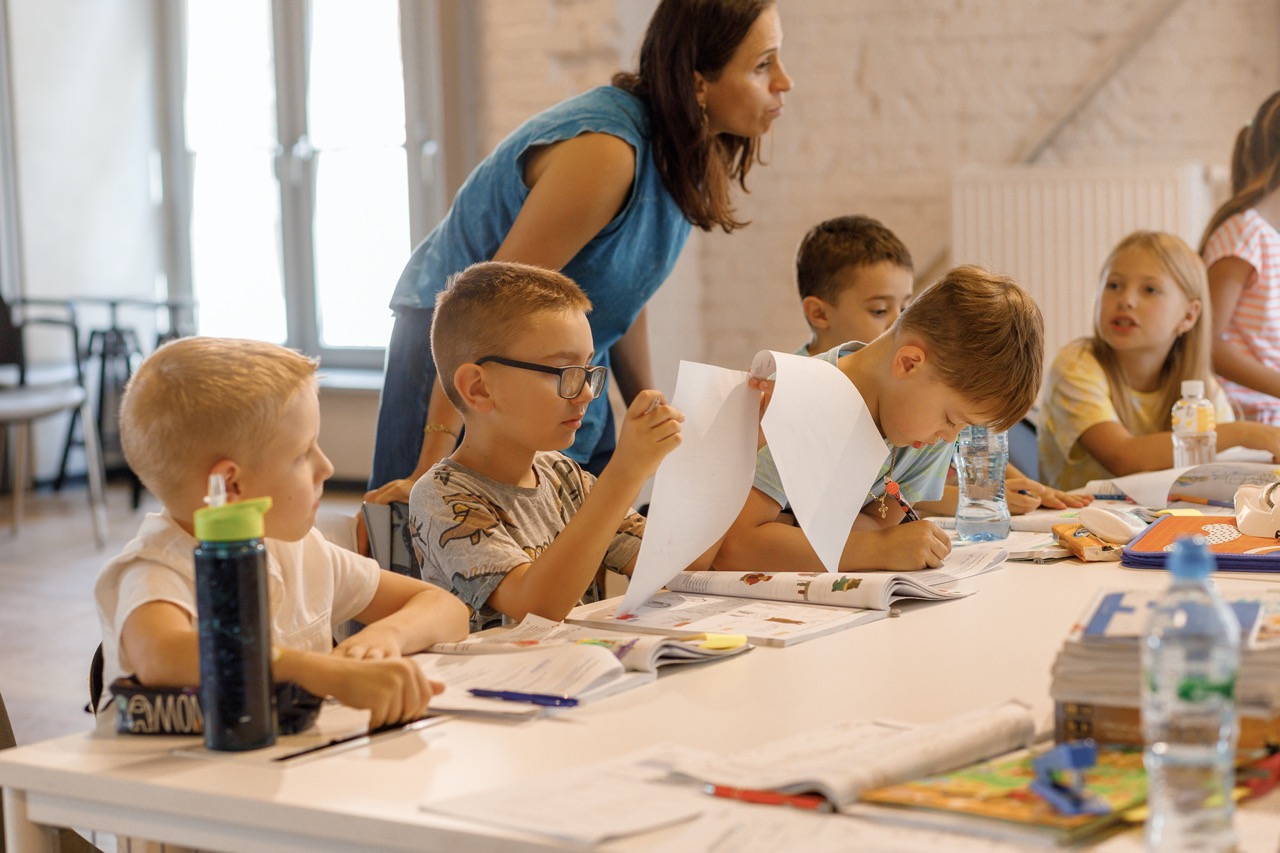
The “Friendly School” project is part of a nationwide programme supporting schools attended by children and young people from Ukraine. It involves comprehensive actions addressed to entire school communities, including all children attending a given school regardless of their background, as well as teachers, parents and guardians.
The programme responds to the challenges faced by schools operating in culturally and linguistically diverse environments, focusing on the everyday functioning of schools, peer relationships and the wellbeing of all members of the school community. Particular attention is given to students with a migration or refugee background, while at the same time strengthening cooperation, competencies and the sense of safety across the entire school community.
Target group
The “Friendly School” programme is addressed to schools and individuals who together shape everyday school life. The support covers:
- schools attended by students from Ukraine who meet the Programme’s eligibility criteria,
- children and young people with a migration or refugee background, including those from countries other than Ukraine,
- Polish students attending the same schools,
- parents and guardians,
- teachers and education system staff.
Programme objective
The main objective of the Programme is to support schools attended by students from Ukraine by creating conditions in which entire school communities feel safe, and children and young people can build positive peer relationships and develop their knowledge, skills and competencies.
Scope of support
The “Friendly School” programme consists of three complementary support modules addressing the needs of students, parents and education system staff in schools operating in culturally diverse environments.
Module 1. Assistant support
This module provides co-financing for the employment of intercultural assistants who support students who are not Polish citizens, in particular children and young people from Ukraine, including students of Roma origin.
The interculture assistant:
- identifies stages of culture shock as well as adaptation and integration barriers,
- supports students in adapting to the Polish education system,
- undertakes activities fostering integration within the school environment,
- supports the equalisation of students’ educational opportunities within the wider school community.
Module 2. School community wellbeing
The aim of this module is to improve the wellbeing of entire school communities in schools attended by students from Ukraine. Activities are implemented through a variety of support measures addressed to students, parents and education system staff, with particular emphasis on mental health prevention and strengthening psychological and pedagogical support.
The module includes:
- support for students – specialist consultations, professional psychological support and career guidance,
- support for parents and guardians of students with a migration or refugee background – assistance in addressing educational and upbringing challenges and developing parenting competencies,
- support for education system staff – assistance in dealing with educational, teaching and caregiving challenges.
Module 3. Professional development of education system staff
This module focuses on strengthening the professional competencies of education system staff in schools attended by students from Ukraine. Its aim is the effective integration of students with a migration or refugee background, ensuring equal educational opportunities and building an open and supportive school environment.
Support is delivered, among others, through training for education system staff in the following areas:
- educational support related to migration or refugee experience,
- working with classes and student groups attended by students with a migration or refugee background,
- inclusive and integration-oriented activities,
- individual support for students.
Expected project outcomes
The implementation of the “Friendly School” project will contribute to strengthening wellbeing, the sense of safety and integration of entire school communities operating in culturally diverse environments. Schools will receive support tailored to their individual needs, potential and the specific nature of working with students with a migration or refugee background.
School students, particularly those with migration experience, will receive effective adaptation-related and psychological-pedagogical support, leading to better functioning in the school environment, the development of social competencies and the equalisation of educational opportunities. Increased integration within class groups will reduce stress levels among new students and create a more open and friendly environment conducive to learning and cooperation.
Thanks to activities addressed to parents, communication barriers between schools and families will be reduced, and strengthened cooperation will translate into coherent and stable support for students as well as a greater sense of safety for children and young people.
Teaching staff and intercultural assistants will enhance their competencies in working with diversity and gain a safe space to discuss professional challenges and develop practical solutions. Regular supervision and training will increase staff psychological resilience, improve coordination within school teams and reduce the risk of burnout, strengthening the sustainability of project outcomes.
- Total value of support: PLN 499,903,491.80
- Contribution of European funds: PLN 412,513,516.80
- Implementation budget in the Lower Silesian Voivodeship: PLN 11,025,950
Our activities within the project
Foundation Ukraine implements activities under Module 2: “School Community Wellbeing” of the “Friendly School” programme in partnership with:
- Dom Pokoju Foundation –https://www.dompokoju.org/, 5/1 Wł. Łokietka St., 50-243 Wrocław,
- Centre for Civic Education Foundation –https://ceo.org.pl/, 10 Noakowskiego St., 00-666 Warsaw.
The activities provide comprehensive support to approximately 200 schools in Lower Silesia in the area of equalising educational opportunities, with particular attention to the needs of students from Ukraine. At the same time, the project is addressed to entire school communities – students, parents and education system staff.
How do we work with schools?
Each school participating in the project undergoes a needs assessment process, allowing us to understand its specific context, challenges and resources. In 160 schools, this assessment is in-depth and carried out by research teams. On this basis, schools receive tailored support packages that respond to their actual needs.
Support is provided both on-site and online, with full language accessibility in Polish and Ukrainian.
Scope of support
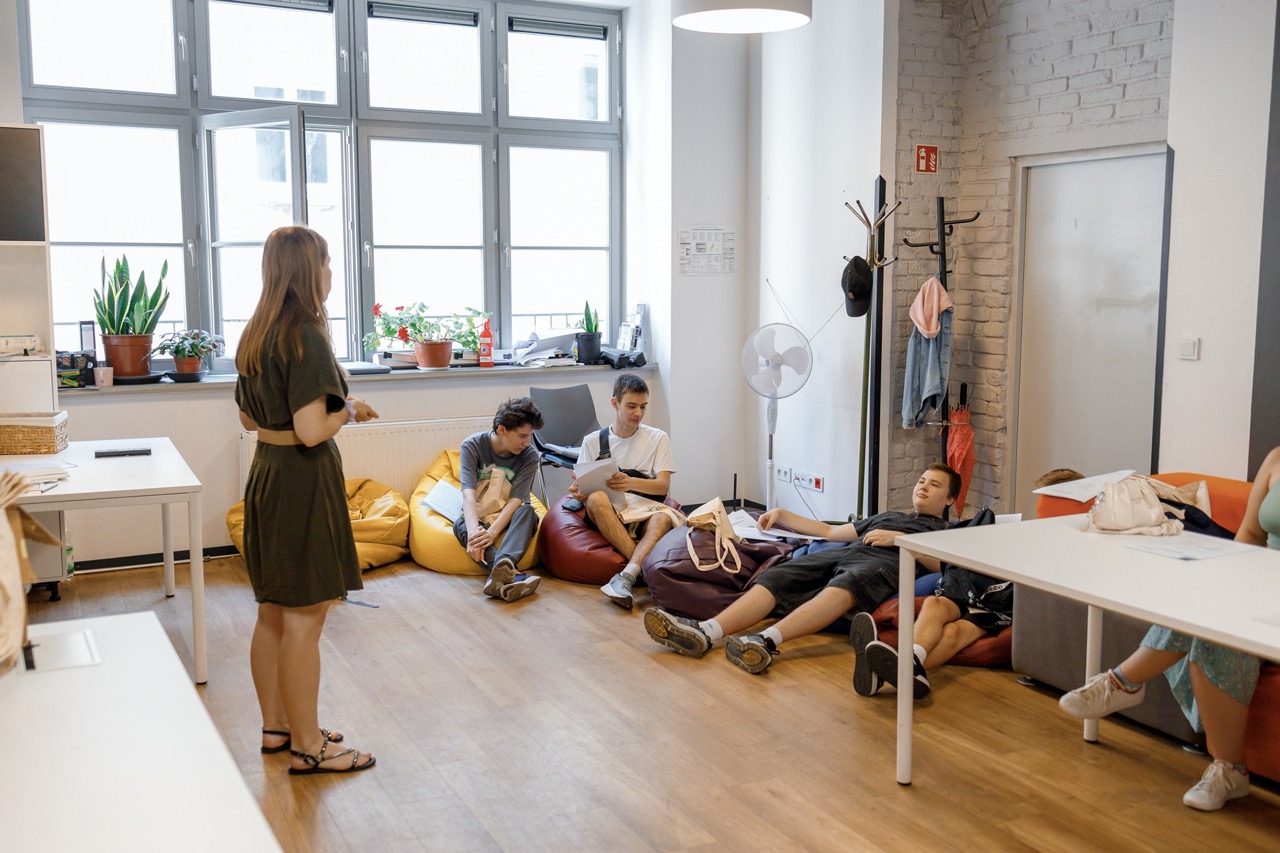
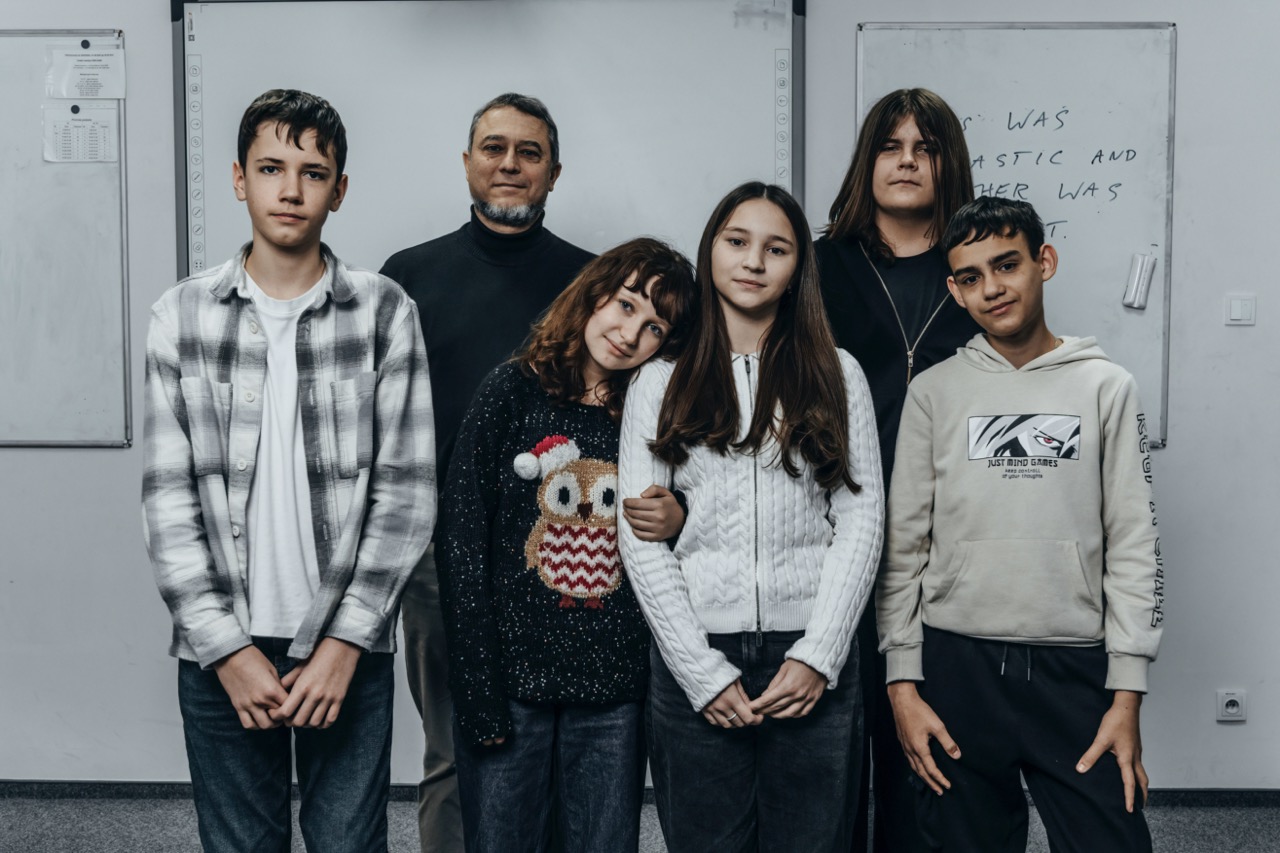
For school students:
- specialist psychological support in Ukrainian – 700 hours of support for 200 individuals,
- specialist consultations (psychological, psychiatric, psychotherapeutic, speech therapy) – 1,400 hours,
- career guidance and support in planning educational and professional pathways – 700 hours of individual consultations and 140 group meetings,
- classroom workshops in the field of MHPSS (Mental Health and Psychosocial Support) – 630 workshops.
For parents and guardians:
- information meetings on supporting children and school functioning – 150 meetings,
- experience-sharing groups for parents – 420 meetings,
- individual consultations (including psychologists, a psychiatrist, a psychotherapist and assistants) – 700 hours,
- Polish language classes for parents with a migration or refugee background – 980 workshops.
For education system staff:
- individual analysis of the needs, challenges and resources of school communities – 160 schools,
- supervision for school staff and intercultural assistants – 390 hours,
- support in conflict management and prevention of peer violence – 360 hours,
- counselling on student integration – 63 group meetings and 3,780 hours of individual consultations,
- support in identifying children’s individual needs – 375 hours,
- psychological, psychiatric and psychotherapeutic consultations for staff – 840 hours.
How to join the programme
Schools interested in participating in the “Friendly School” programme are invited to join the project.The application form should be completed by the school principal or a person authorised by them:
👉https://forms.gle/Mdw13s6JbFjmhFC67
After submitting the form, we will contact you to jointly select the most appropriate forms of support for your school community.
At the same time, we invite psychologists and career counsellors who wish to engage in the implementation of project activities to cooperate with us. We are looking for specialists working with children and adults who are proficient in Polish and Ukrainian.Current cooperation opportunities are available in the “Job offers” section:
👉https://fundacjaukraina.eu/zapytania-ofertowe/
Frequently asked questions about the Programme
Can any school take part in the Programme?
No. The project supports schools that have at least one student from Ukraine who arrived in Poland on or after 24 February 2022 due to the war in Ukraine.
Is support available only to children from Ukraine?
No. The support provided through the project is intended for the entire school community, regardless of background or nationality. Our activities are therefore open to all students, their parents and school staff. Depending on participants’ needs, support is available in Polish, Ukrainian, Russian or English.
Does participation in the project involve any costs for schools?
No. Schools do not incur any costs for joining or participating in the Programme. “Friendly School – Module II” is a government programme aimed at promoting equal educational opportunities for children and young people. It is co-financed by the European Social Fund Plus under the European Funds for Social Development Programme.
Do schools have to participate in all project activities?
No. The project offers a flexible approach. Schools can choose which forms of support best suit their needs, whether that means participating in selected activities or taking advantage of the full range of services. We also help schools assess their needs to ensure the support offered is as relevant and effective as possible.
Who will provide the support?
Support will be provided by experts from three partner organisations: Foundation Ukraine, the House of Peace Foundation and The Center for Citizenship Education (CCE).
These professionals have many years of experience working with children, young people, teachers and entire school communities. They combine specialist knowledge with practical experience and a thorough understanding of the challenges schools face in their everyday work.
You can find out more about the organisations and the people behind their work on the websites of Foundation Ukraine, the House of Peace Foundation and The Center for Citizenship Education.
What is the difference between the basic and extended support packages?
The project offers schools two levels of support: basic and extended. To access the basic package, a school simply needs to register for the Programme and sign an agreement covering its selected activities. The extended package is available to schools that complete a needs assessment conducted by the House of Peace Foundation.
Which activities are included in the basic support package?
- Psychological support for students (Foundation Ukraine)
- Individual and group career guidance (Foundation Ukraine)
- Information sessions for parents on the Polish education system and the different ways they can support their children (Foundation Ukraine)
- Supervision sessions for intercultural assistants (Foundation Ukraine)
- Consultations with a psychologist for teachers (Foundation Ukraine)
- Individual and group supervision sessions for teachers (CCE)
- An educational programme providing schools with resources on promoting well-being across six key areas — the “Well-being. Let’s Take Action!” series (CCE), together with activities supporting its implementation in schools:
- Online group consultations in the form of webinars and in-person thematic workshops introducing the six modules focused on developing well-being in schools (CCE)
- 2,400 hours of individual mentoring for school staff, supporting their work with culturally diverse classrooms, conflict prevention and the development of a welcoming school environment (CCE)
- Mentoring support for implementing activities that help create a welcoming and safe atmosphere at school (CCE)
Which activities are included in the extended support package?
- Additional psychological support for young people aged 13 and over (Foundation Ukraine)
- Integration and psychoeducational workshops for classes (Foundation Ukraine)
- Integration meetings for parents (Foundation Ukraine)
- Individual psychological consultations for parents (Foundation Ukraine)
- Polish language workshops for parents with a migration background (Foundation Ukraine)
- Support in reviewing and updating the school’s educational and prevention programme through expert consultations (CCE)
- Individual and group supervision sessions for teachers (CCE)
- Support in identifying the special educational needs of students with migration or refugee backgrounds (CCE), students of Roma origin (House of Peace Foundation), and students with disabilities (CCE, House of Peace Foundation)
What does the school needs assessment involve?
The school needs assessment is an individual evaluation of a school’s current situation, resources and challenges. It is carried out by the House of Peace Foundation team in cooperation with school staff. Its purpose is to gain a clear understanding of each school’s specific circumstances and identify the most appropriate support available through the Friendly School Programme.
The assessment takes the form of discussions with teaching staff, during which we explore how the school currently operates. This includes relationships and the overall school atmosphere, the needs of students, parents and staff, as well as any challenges they face. Equally important are the school’s strengths and existing resources, such as staff experience, initiatives, proven approaches and opportunities for further development. Together, we use these insights to identify areas where additional support could be beneficial.
The outcome is a report containing practical recommendations to help the school plan its next steps and select the most suitable support pathway within the Friendly School Programme.
The assessment is not an inspection or a performance evaluation. It is a tool designed to help schools plan meaningful improvements while building on what already works well and making the most of their existing strengths.
Will our school be responsible for managing project documentation?
No. Project documentation is handled by the organisations implementing the project.
Schools are only responsible for certain practical and organisational tasks, such as collecting parents’ signatures on consent forms provided by us in advance (for activities involving children), arranging suitable rooms, helping select classes or students who would benefit from support, and appointing a contact person to coordinate organisational matters with the foundations’ staff.
Will support activities take place at school?
Generally, yes. Most activities are delivered on school premises to make support easily accessible to participants.
However, if a particular activity cannot be organised at school or practical difficulties arise, it may take place at another location agreed upon with participants in advance, or online.
What formats of support does the Programme offer?
Most activities are delivered in person at schools by qualified specialists in the relevant fields.
However, some services, such as consultations for parents, language support and consultations for teachers, are offered in a hybrid format, depending on the school’s capacity and participants’ preferences.
How do supervision sessions for teachers work?
Participation in supervision sessions is voluntary and open to interested teachers. Sessions are held online and facilitated by trained professionals with extensive experience working with teachers and school communities.
Two forms of support are available:
1. Individual supervision — one-to-one sessions lasting one hour, designed to explore specific cases in depth, develop intervention plans or address individual professional challenges.
2. Group supervision — facilitated sessions in small groups lasting between one and two hours, focused on sharing experiences, discussing real-life school situations and developing practical solutions together.
Teachers interested in participating will receive access to a shared calendar of supervisors, allowing them to book a session at a convenient time.
How can a school register for specific activities?
If your school would like to participate in the Programme, the headteacher or a person authorised by the headteacher should complete the registration form available at the following link:
After the form has been submitted, representatives of the relevant foundations will contact your school to explain the next formal steps, including signing the participation agreement. They will then work with you to arrange the practical details and implement the activities your school has selected.
How can a school choose an educational programme offered by CCE?
To register for CCE’s educational programme, schools are invited to complete a questionnaire designed to help them select one of six thematic modules focused on promoting well-being at school. Schools can choose the module they would like to work on during the upcoming semester.
In addition, The Center for Citizenship Education offers schools a publication entitled “Well-being Map”, available in both print and digital formats. This practical tool helps school communities assess their current situation and collectively monitor progress towards creating a more welcoming and supportive school environment.
Although the tool forms part of CCE’s educational programme, it can also be used independently. Schools can revisit it in subsequent semesters to reflect on the changes they have successfully introduced, celebrate their achievements and identify further areas for improvement.
Can parents register for the Programme independently if they would like to receive support?
Yes, provided that their child’s school has joined the Programme and signed an agreement covering activities for parents.
For example, parents can register independently for individual psychological consultations and Polish language workshops using a dedicated registration form.
The form can be obtained from the person responsible for coordinating the Programme at the school or directly from Foundation Ukraine, which delivers these activities.
Can a child receive support if their school has not joined the Programme?
No. The Programme is designed to support the entire school community, so the school must be formally participating for students to access its services.
However, if you find yourself in this situation, please contact Foundation Ukraine. We will help your child’s school complete the necessary registration formalities so that your child can receive the support they need.
The government programme for equalising educational opportunities for children and young people “Friendly School” for 2025–2027 is co-financed by the European Social Fund Plus under the European Funds for Social Development Programme 2021–2027, Action 04.17 “School for All”, as well as from the state budget.