


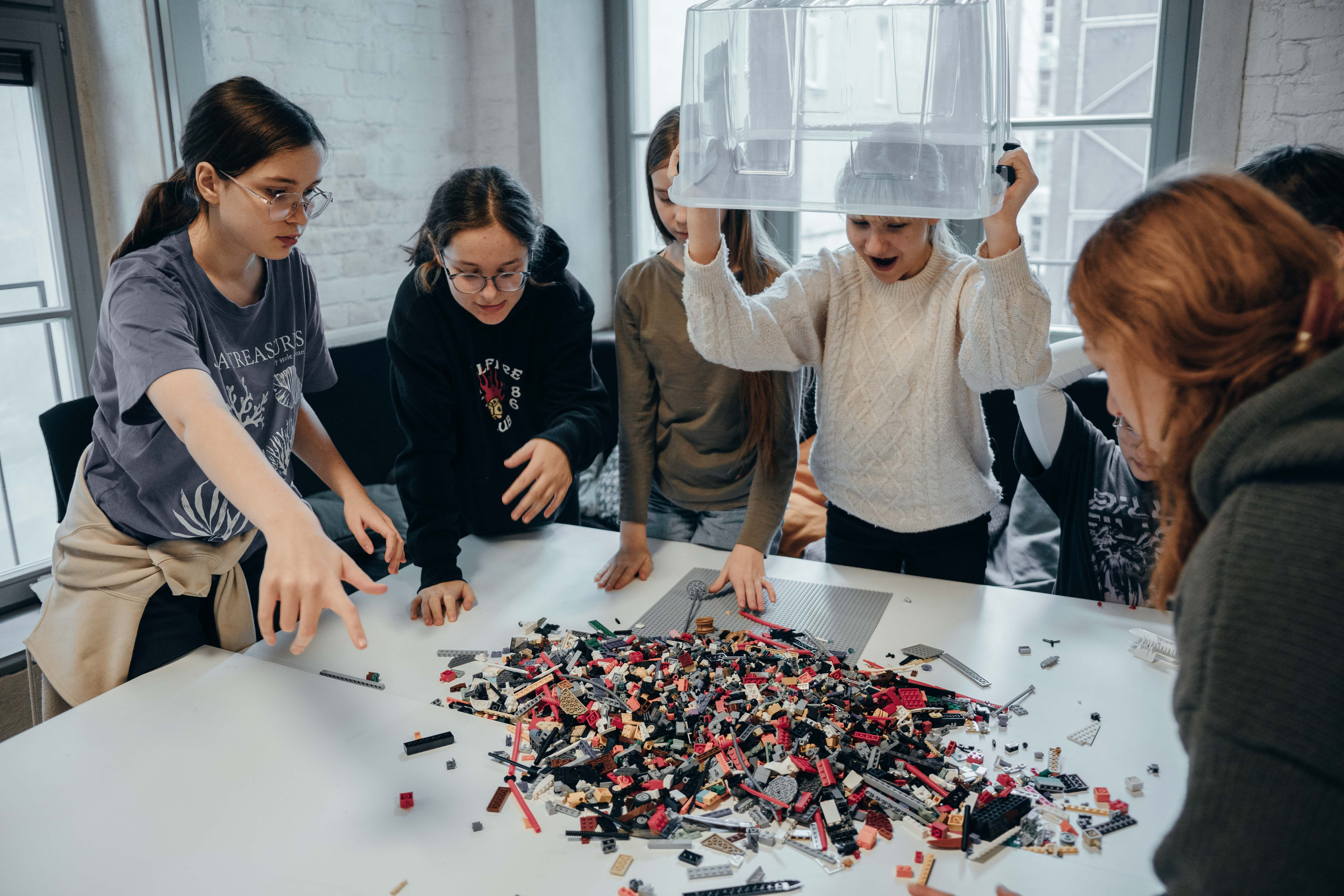

Today’s schools are increasingly becoming spaces where different languages, cultures, experiences and family backgrounds come together. For students, this creates an opportunity to develop empathy, openness and social skills. At the same time, cultural diversity in the classroom presents teachers and school staff with new challenges related to class integration, building trust, communication and preventing exclusion.
These are exactly the areas addressed by our integration and anti-discrimination workshops using the LEGO® Serious Play® method, delivered as part of the “Lower Silesian Centre of Polish Culture” project. The project has been running for almost two years, with a total of 160 workshop cycles planned for classes across Lower Silesia.
We run workshops in Wrocław, Jelenia Góra, Legnica and Wałbrzych. They can take place either at the Lower Silesian Centres for Polish Culture or directly at participating schools.
Registration for Grades 4–7 for the 2026/2027 school year is now open! Explore the programme and register your class.
Why take part?
The workshops are designed primarily for culturally and linguistically diverse classes – where children from different countries, including those with migration or refugee backgrounds, learn together and speak different languages.
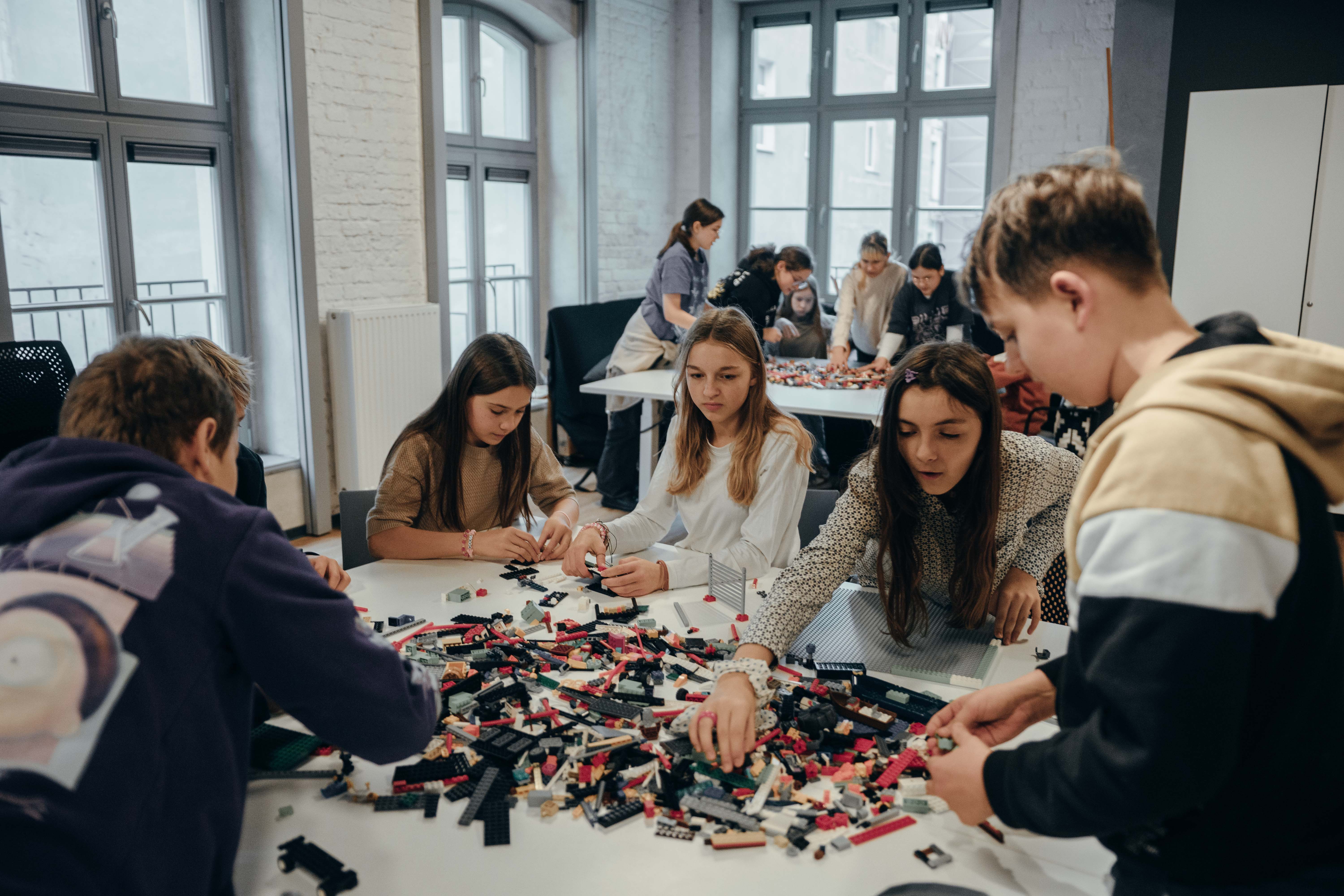
We start with everyday relationships in the classroom: how students feel within the group, how they communicate with one another, what helps them work together and where difficulties arise. During the workshops, students have an opportunity to get to know one another better, explore their similarities and differences, and think together about what they need to feel comfortable and work well as a team.
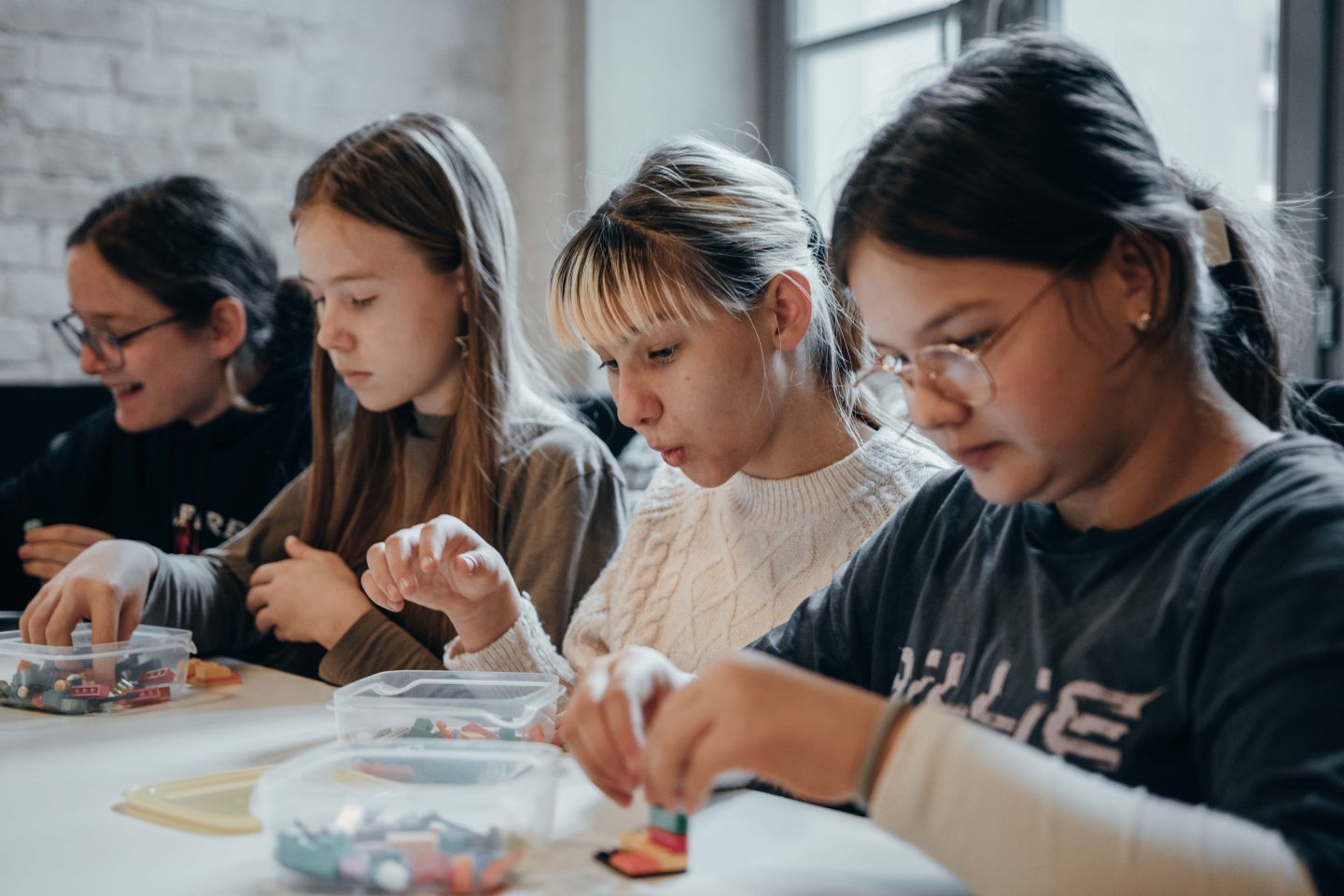
LEGO bricks are not the goal in themselves – they are a tool for starting conversations. Participants build models in response to questions from the facilitator and then explain what they have created. This makes it easier for everyone to join the conversation, including students who are less likely to speak in front of the whole class, experience language barriers, or simply find it easier to express their thoughts through hands-on activities.
What do students gain?
During the workshops, students:
- discover what they have in common and what makes them different;
- learn to understand one another better;
- develop communication and teamwork skills;
- practise active listening and respect for different perspectives;
- strengthen their sense of belonging to the class;
- develop ideas together for building a more integrated class community.
This kind of work helps foster openness, challenge stereotypes and build relationships based on trust.
What does it look like in practice?
Each registered class takes part in a series of three two-hour sessions. Dates are arranged together with the school – for example, sessions can take place once a month, making them easier to fit into the school calendar.
The first sessions focus on getting to know the group better and exploring how students see their class and what they need to feel comfortable within it. Later, the focus shifts towards relationships, teamwork and finding solutions together.
By the end of the third session, the class leaves with concrete ideas and an action plan that can be used to continue strengthening integration and relationships within the group.
What do participants and facilitators say?
Every group experiences the workshops a little differently. Younger students tend to remember the building activities, having fun together and the time they spent as a group. Older students are more likely to highlight teamwork, conversations and the changes they notice in their relationships with classmates.
Grade 4: “What I’ll remember from the workshops is that integration is important!”.
“Building our class with LEGO bricks and having interesting discussions.”
Grade 6: “The sessions are interesting. We build different things and talk about important topics.”
“During those three workshops, we really came together as a group. We worked as a team and were more creative than we had ever been together at school. I’d love to come again because I really enjoyed working with everyone.”
Grade 7: “On a scale of 1 to 10, it’s a 10! Spending time together and building with LEGO. A great place to develop your imagination.”
Sometimes the impact of the workshops goes even further. They can create space for conversations about issues that had previously remained unspoken within the class.
“After one of the workshop cycles, a group of children came up to me to thank me for the time we had spent together. They told me that thanks to the workshops and the open discussion, they had managed to resolve an issue that had been troubling them for a long time. Moments like these are the most valuable feedback I could receive.”
Aneta Herbuś, educator
Facilitators also hear from students that being outside their usual school environment can help them see one another differently.
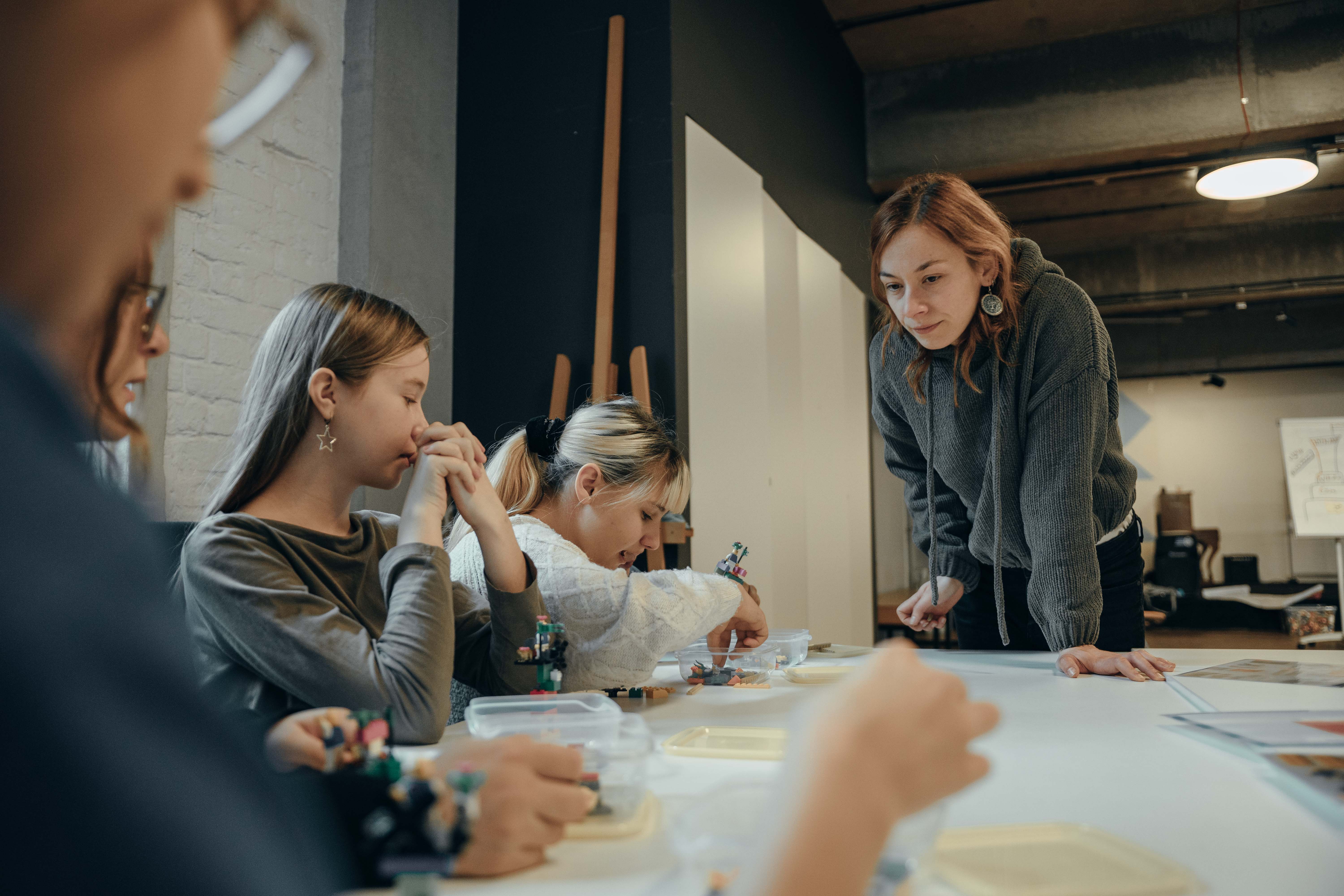
“Students sometimes tell us that the room where the workshops take place must be magical – because at school they can barely stand each other, while here everything seems to work and they are much more understanding towards one another. They can step outside the roles they usually have in the classroom, work with people they have never worked with before and discover something new about each other. These sessions also often give class teachers a starting point for continuing this work with their students.”
Anita Maksymowicz and Klaudia Wyglądacz, educators
How to sign up your class?
For the 2026/2027 school year, we are accepting registrations from Grades 4–7 at schools across Lower Silesia, with a particular focus on culturally and linguistically diverse classes.
Schools can register one or several classes. A class can be registered by a teacher, class teacher, intercultural assistant or school management.
If there is a class at your school that could benefit from getting to know one another better, strengthening relationships or having a dedicated space to talk about teamwork and diversity, we invite you to join the programme.
Registration and enquiries: edukacja@fundacjaukraina.eu
Follow our social media:
Facebook: https://www.facebook.com/fundacja.ukraina
Instagram: https://www.instagram.com/fundacjaukraina.eu/
#FunduszeUE #FunduszeEuropejskie
——————————-
The “Lower Silesian Center of Polish Culture” project is co-funded by the National Programme of the Asylum, Migration and Integration Fund and the state budget of Poland.