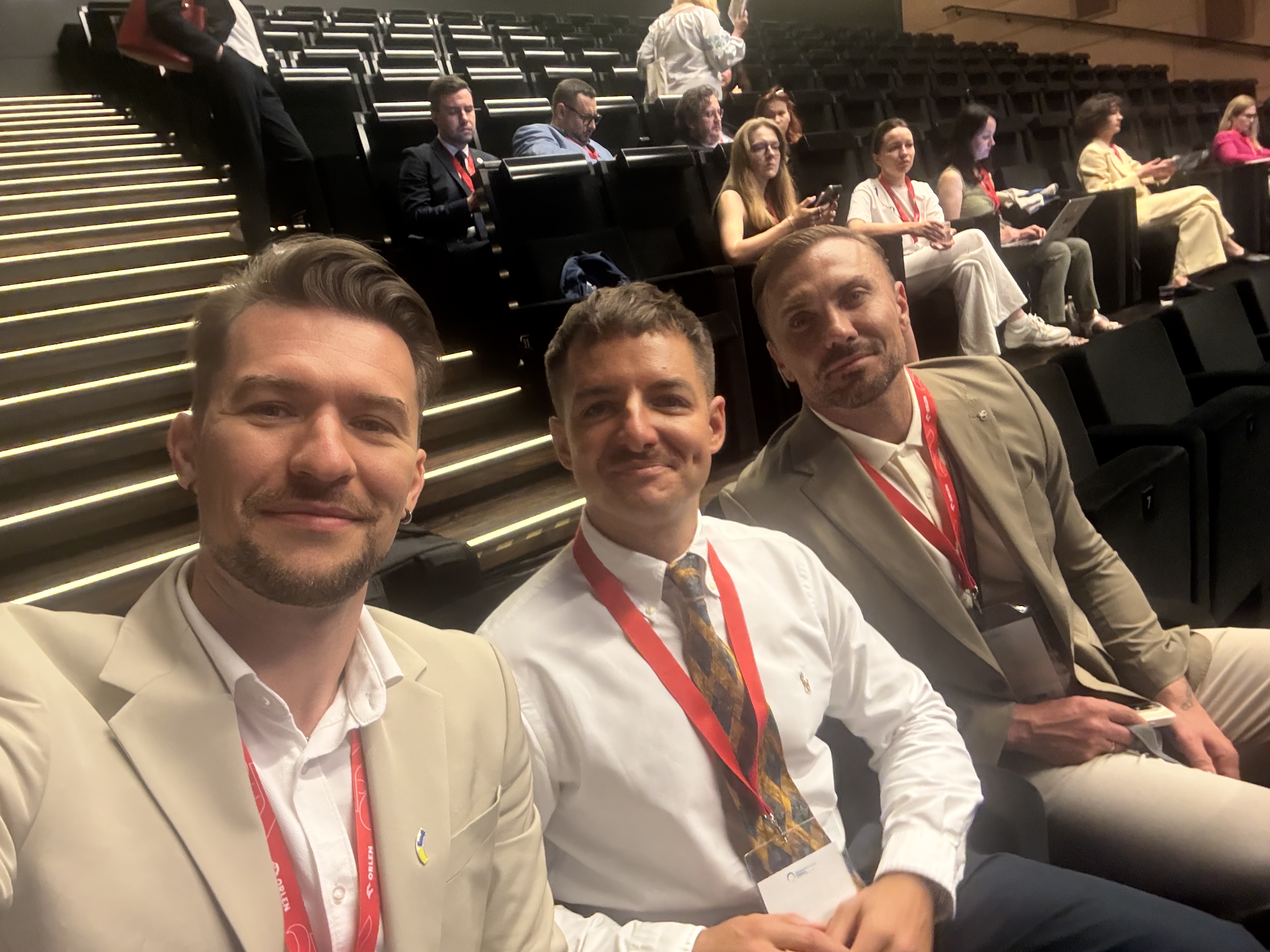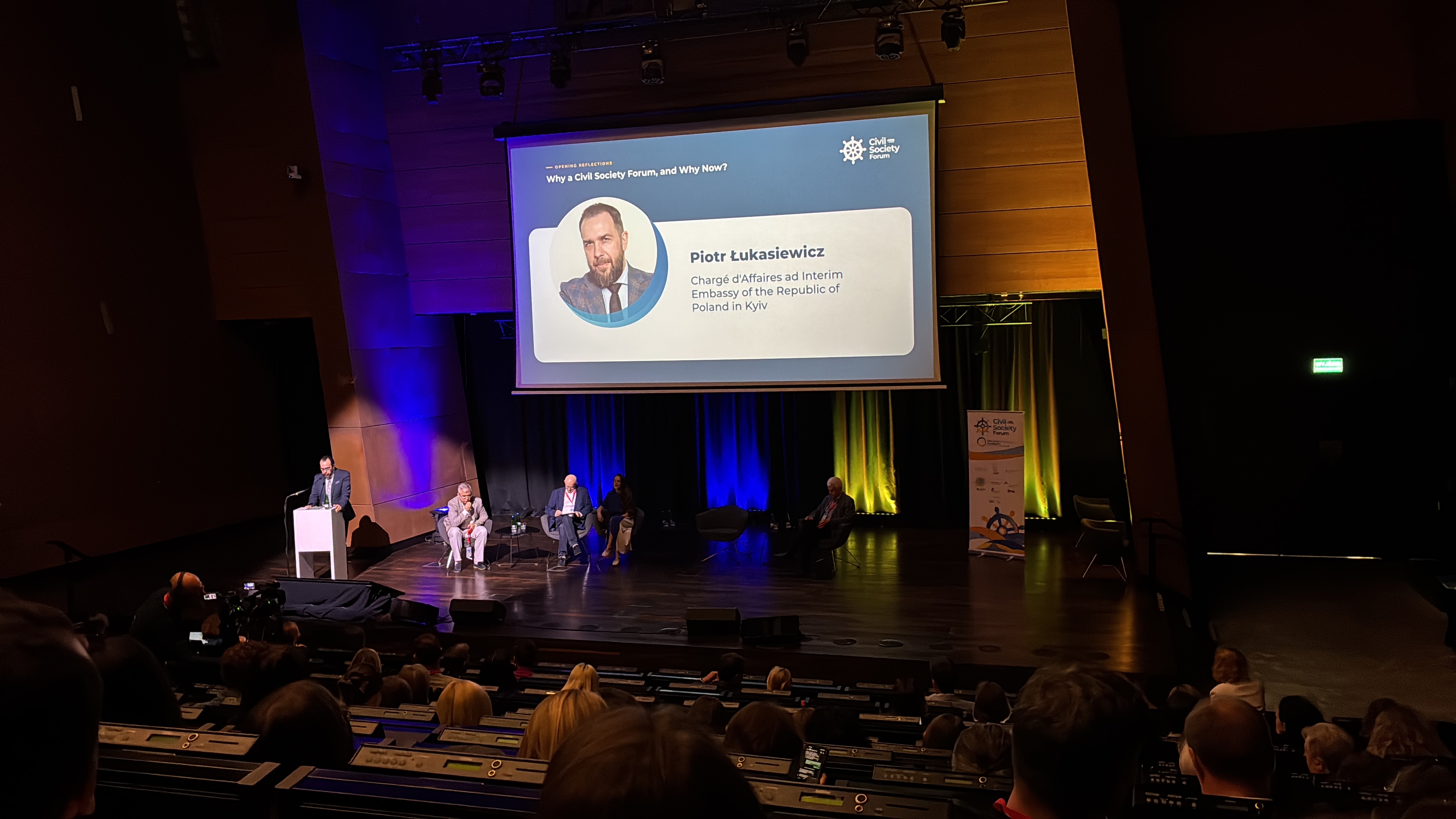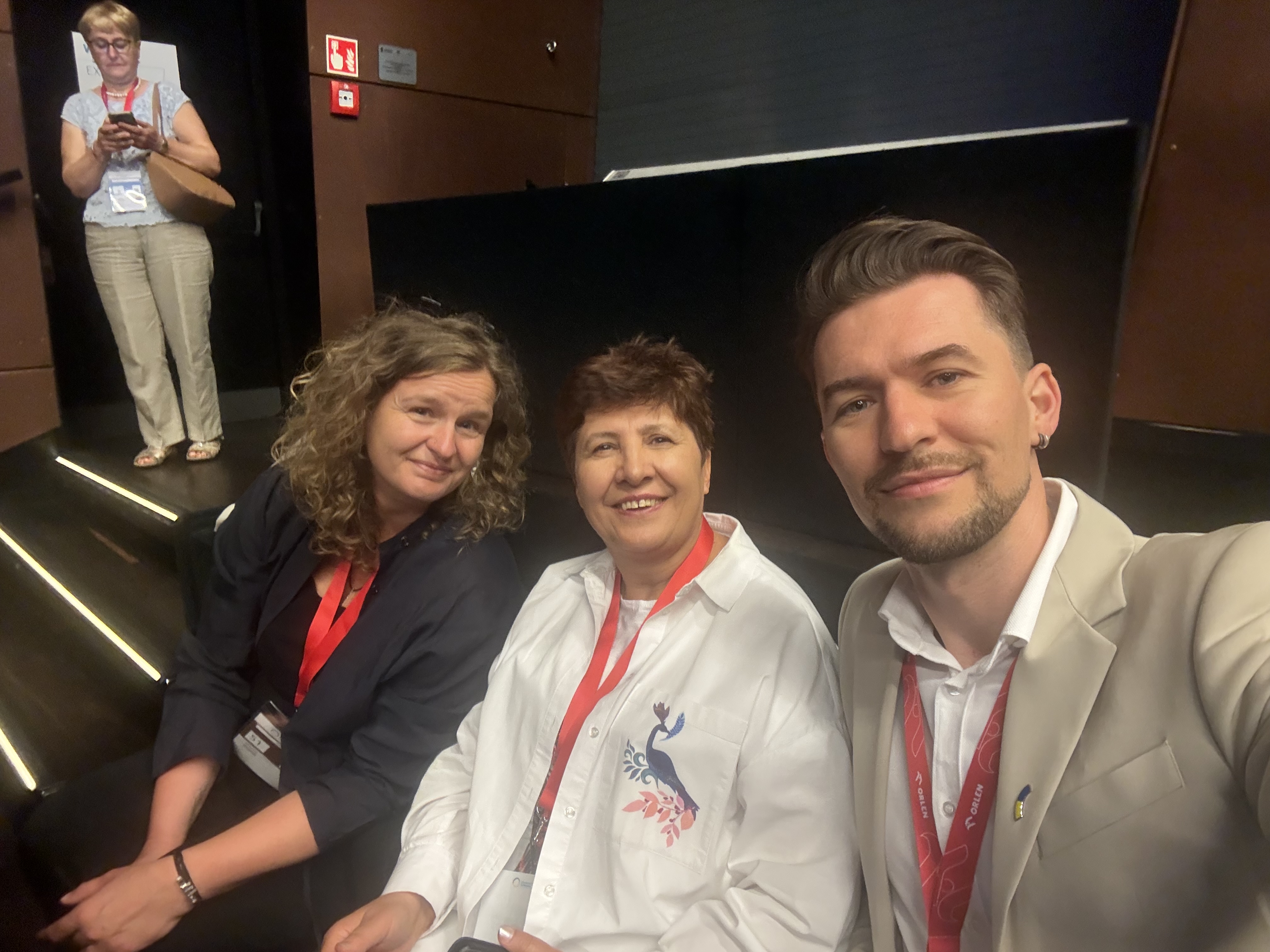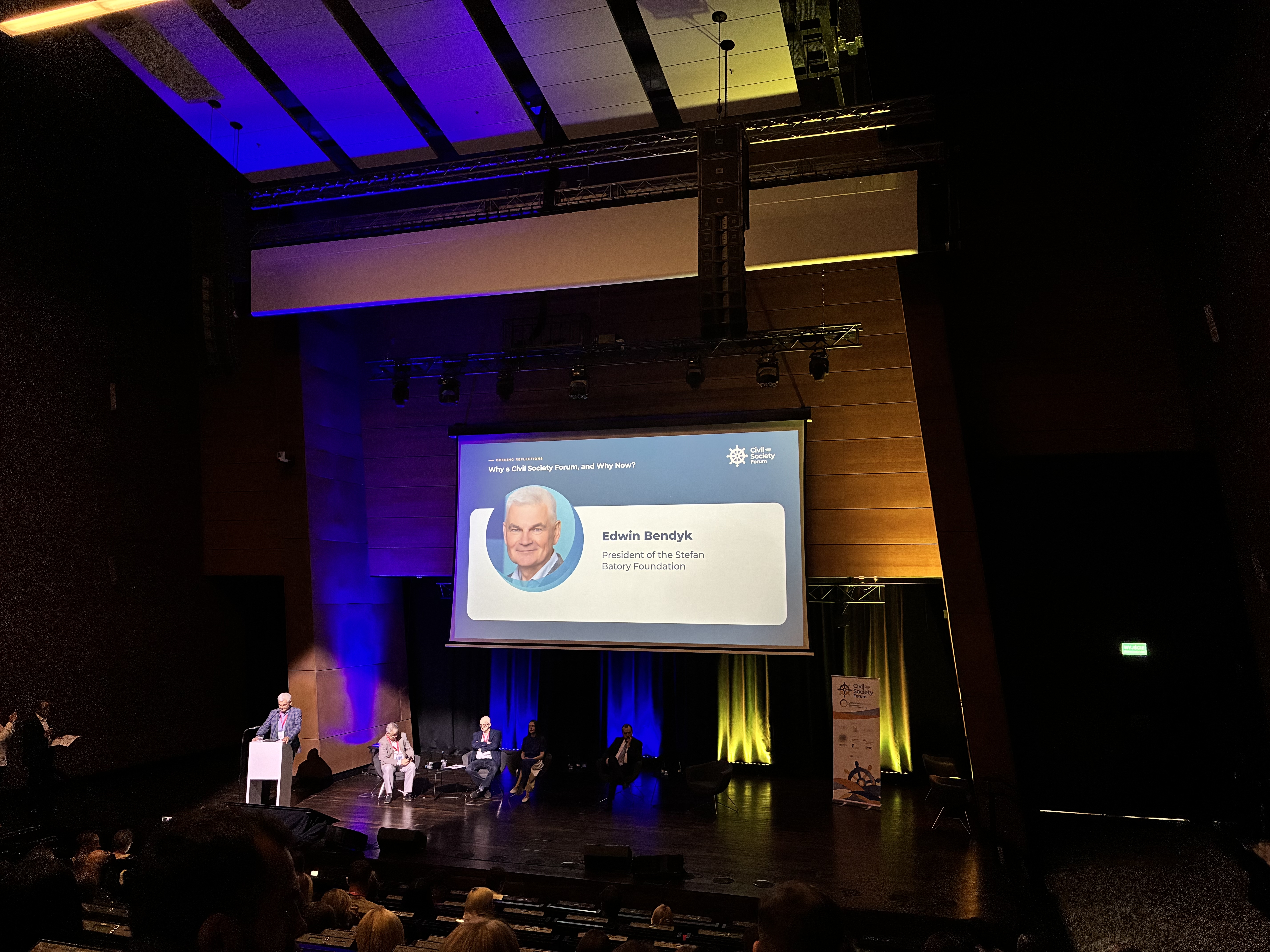



On 24 June 2026, at the European Solidarity Centre in Gdańsk, Poland, more than 400 representatives of civil society, public institutions, and international organisations gathered for the Civil Society Forum – the official pre-event of the Ukraine Recovery Conference 2026, co-hosted by Poland and Ukraine. Foundation Ukraine was represented at the Forum by our Vice-President, Igor Lisin.
The Forum created an important space for dialogue on Ukraine’s recovery, resilience, democratic development, and European integration. Participants included representatives of civil society organisations, think tanks, philanthropic institutions, public authorities, experts, and practitioners from Ukraine, Europe, and beyond.
Igor Lisin’s participation provided Foundation Ukraine with an opportunity to contribute to discussions on the role of civil society in shaping Ukraine’s future, as well as to exchange experience with organisations and institutions involved in recovery, integration, humanitarian support, and the development of resilient local communities.
Civil society as a strategic partner in recovery
The Civil Society Forum was jointly organised by the European Endowment for Democracy, the International Renaissance Foundation, and the Stefan Batory Foundation, in partnership with a broad coalition of Ukrainian and international organisations supporting Ukraine’s recovery and democratic resilience.
The programme included high-level plenary discussions, thematic panels, working sessions, and networking opportunities. Participants discussed how to ensure that Ukraine’s recovery is sustainable, inclusive, transparent, and based on genuine cooperation between public authorities, international partners, local communities, businesses, and civil society organisations.
A recurring message throughout the Forum was that civil society should not be treated merely as a beneficiary or consulted stakeholder. It must be recognised as an equal and strategic partner involved in designing, implementing, and monitoring recovery policies.
This perspective is particularly important because Ukrainian civil society has played a crucial role since the beginning of Russia’s full-scale invasion. Civil society organisations have delivered humanitarian assistance, supported displaced people and local communities, strengthened social resilience, contributed to reforms and European integration, and developed innovative solutions under extremely difficult conditions.
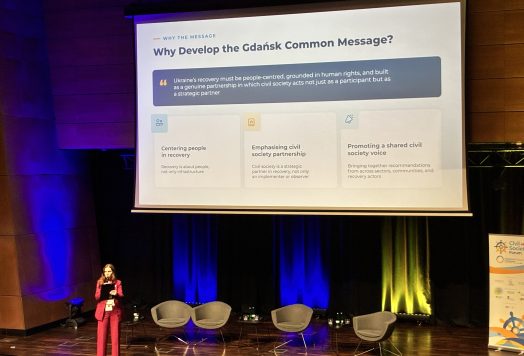
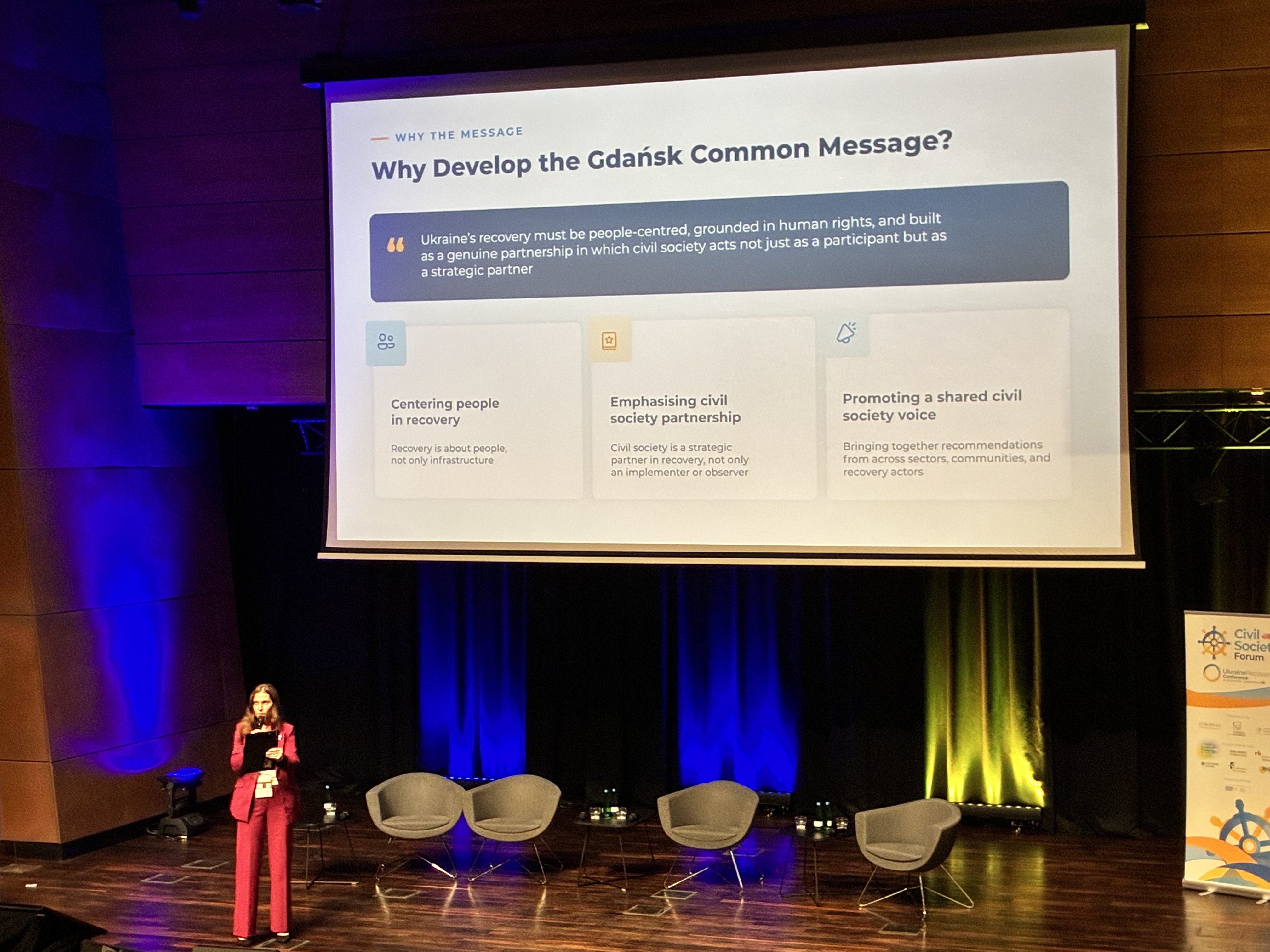
One of the Forum’s key outcomes was the Gdańsk Common Message – a joint statement reflecting the priorities, recommendations, and commitments of Ukrainian and international civil society organisations.
The Gdańsk Common Message
At a defining moment for Ukraine’s future, civil society speaks with a united voice. The Gdańsk Common Message sets out a shared contribution to the global conversation on Ukraine’s recovery and European path, bringing together the perspectives and expertise of Ukrainian and international civil society organisations.
Developed ahead of the Ukraine Recovery Conference 2026, it is addressed to Ukrainian national authorities, international partners, and all those shaping recovery efforts. It serves as a benchmark for the Ukraine Donor Platform and its members to track whether commitments are translated into real action.
We emphasise that Ukraine’s recovery must be people-centred, grounded in human rights, and built as a genuine partnership in which civil society acts not just as a participant but as a strategic partner. Throughout Russia’s war against Ukraine, civil society has been at the forefront of the national response. It has mobilised billions of hryvnias in support for defence and security, delivered immediate humanitarian assistance, strengthened local resilience, and driven innovation in the most challenging conditions. Civil society organisations have supported Ukraine’s EU integration and reform path by helping develop public policies and providing independent expertise, piloted sustainable reconstruction initiatives and developed tools that advance transparency and accountability. We call for accountability and action that will remove barriers to further collaboration and true cross-sectoral partnership for making the recovery deliver.
Gdańsk, with its legacy of solidarity, civic participation, and democratic transformation, provides a powerful setting for this Message. It reminds us that lasting change is driven by engaged citizens and shared responsibility. In this spirit, we call on all partners to ensure that the principles of the Gdańsk Common Message guide decisions, investments, and actions shaping Ukraine’s recovery trajectory.
Our Vision for Recovery
We envision a people-centred and rights-based recovery for Ukraine, grounded in security and justice as indispensable preconditions for lasting peace in Europe. Recovery must continue even amid ongoing hostilities, but it can only fully take root when Ukraine is safe through a complete cessation of aggression, credible security guarantees, protection and strengthened resilience for its people and infrastructure. A just and lasting peace is essential and must include accountability for aggression, prosecution of war crimes, and legally binding reparations by Russia. Without security and justice, recovery efforts will be fragile and incomplete. Recovery must be inclusive, participatory, professionally delivered and locally owned, with full participation of civil society as an equal partner at all stages.
Priority Actions
Delivering this vision will require changes not only in what recovery actors fund, but also in how recovery decisions are made and implemented. The following actions identify practical steps that the Government of Ukraine, international partners, and civil society can take to translate these principles into lasting change.
We call on the Government of Ukraine and international partners to jointly ensure that:
● Civil society is recognised as a co-author of recovery, including through structured mechanisms and
formats for regular and meaningful engagement with the Ukraine Donor Platform
● Reform commitments for European integration are translated into action by embedding human rights, anti-corruption safeguards, and the rule of law across all stages of recovery
● Humanitarian, early response, and development financing form coherent pathways toward long-term resilience and recovery by aligning funding instruments to support displaced populations and affected communities from emergency response to sustainable economic development and social participation
● Energy resilience is further strengthened through the development of decentralised, renewable-based systems that enhance security, support recovery, and ensure reliable access to critical services across communities
● Long-term investments in people and essential social services are prioritised, including dedicated financing for affordable housing, social infrastructure, healthcare, education, workforce development, youth leadership, mental health services, and rehabilitation that enables Ukrainians to live, return, and thrive in their communities
● Coordinated frameworks for strengthening social cohesion and facilitating return, (re)integration, andinclusion are developed to support veterans, displaced Ukrainians, persons with disabilities, and other groups disproportionately affected, ensuring no one is left behind
● Structured partnerships connect Ukrainian and European institutions and communities to support peer learning, project preparation, participatory planning, co-financing, monitoring, public consultation, and alignment with EU standards
Additionally, we call on the Government of Ukraine to ensure that:
● Integrated development strategies are created at all levels, ensuring that recovery priorities are locally driven, informed by community needs, and designed in partnership with civil society, local authorities, businesses, and affected populations
● National and local institutions are equipped to lead recovery and EU integration by advancing public administration reform, better coordinating technical assistance, and developing measures to attract, retain, and empower qualified public servants
● Mechanisms for participation are institutionalised across recovery governance, including through implementation of the Law of Ukraine “On Public Consultations” and regular engagement with civil society, communities, and affected groups
● Culture and independent media are recognised as cross-cutting and essential components of identity, social resilience and democratic participation, and their durability is supported as part of recovery investments
● Environmental safeguards are upheld across all the sectors of the economy through implementation of EU‑aligned policies, in particular environmental assessments, monitoring, control and nature conservation, so that recovery accelerates accession readiness and builds country’s resilience
Additionally, we call on international partners and the Ukraine Donor Platform to ensure that:
● Direct, flexible, and multi-year financing is expanded for local recovery actors, including civil society, community initiatives, and social enterprises, while simplifying compliance requirements and reducing reliance on international intermediaries
● Recovery moves beyond fragmented projects toward integrated, locally owned approaches, including by reducing the disconnect between international donor frameworks and community-level interventions that give communities greater decision-making power and support a more coherent approach to building back better
● Frameworks for social and economic inclusion are strengthened through qualification recognition, skills development, psychosocial support, rehabilitation, and (re)integration programmes for displaced Ukrainians, veterans, persons with disabilities, and other affected groups, enabling their participation in the labour market and society
Looking ahead
For Foundation Ukraine, participation in the Civil Society Forum reaffirmed the importance of strong cooperation between civil society organisations, public institutions, donors, and international partners in building resilient and inclusive communities. As an organisation working daily with migrants, refugees, and local communities in Poland, we see how people-centred, partnership-based approaches create lasting social impact.
The Forum highlighted that sustainable recovery depends not only on rebuilding infrastructure, but also on investing in people, communities, and democratic participation. Foundation Ukraine remains committed to contributing its experience and expertise to initiatives that support Ukraine’s recovery, European integration, and resilient communities.